
Switching from a gas boiler to a heat pump isn’t just a maintenance decision anymore—it’s a compliance deadline for many commercial property owners in New York City.
If you manage a commercial building, mixed-use property, or multifamily complex, the choice between heat pumps and gas boilers now carries financial, operational, and regulatory weight that didn’t exist five years ago. Local Law 97 penalties, a 2025 gas boiler restriction, and rebate programs through Con Edison’s Clean Heat initiative are reshaping how building owners plan capital improvements. This article breaks down the real numbers behind efficiency, cost, and emissions so you can make a decision that fits your building’s age, layout, and budget.
Article-at-a-Glance
- Heat pumps operate at 300-400% efficiency compared to the 80-95% ceiling for gas boilers, meaning they produce three to four times more heat energy than the electricity they consume
- Gas boilers cost less upfront but expose your operating budget to volatile natural gas pricing, while heat pumps carry higher installation costs offset by federal tax credits and Con Edison rebates
- Local Law 97 and New York’s 2025 gas boiler restrictions are pushing building owners toward electrified heating faster than many realize
- Cold-climate systems like Mitsubishi Hyper Heat can still generate warmth at -13°F, closing the performance gap that once made boilers the only option for harsh winters
- Your building type—whether it’s a pre-war walk-up or a new Queens multifamily development—largely determines whether a full heat pump conversion, a hybrid system, or a boiler upgrade makes the most financial sense
Heat Pumps Hit 300-400% Efficiency While Gas Boilers Cap at 95%
Efficiency is where these two systems diverge the most dramatically. Industrial and commercial heat pumps routinely achieve 300-400% efficiency, which means for every unit of electricity they consume, they deliver three to four units of heat energy back into your building. Gas boilers, by contrast, top out around 80-95% AFUE (Annual Fuel Utilization Efficiency), with some heat always escaping during the combustion process itself.
That gap isn’t a rounding error—it’s the difference between a system that multiplies the energy you put in and one that loses a chunk of it to exhaust and heat transfer inefficiencies.
How Coefficient of Performance (COP) Works for Heat Pumps
Metric | Heat Pumps | Gas Boilers  |
|---|---|---|
Efficiency Range | 300-400% | 80-95% AFUE |
COP Rating | 2-6 | N/A |
Minimum Operating Temp (Cold-Climate Models) | -13°F | Not applicable—combustion-based |
Coefficient of Performance, or COP, measures how much heat output you get per unit of electrical input. A heat pump with a COP of 2-6 means it’s delivering two to six times more heating (or cooling) energy than the electricity it draws. This number fluctuates based on outdoor temperature, which is why COP tends to drop during the coldest stretches of winter, even on high-performing systems.
Manufacturers test and publish COP ratings under specific temperature conditions, so when you’re comparing units for a commercial retrofit, check the COP at your region’s average winter low—not just the manufacturer’s best-case number.
AFUE Ratings Explained for Gas Boiler Systems
AFUE tells you what percentage of fuel input actually converts to usable heat over a full year, accounting for cycling losses and standby periods. A boiler rated at 90% AFUE turns 90 cents of every dollar spent on gas into heat for your building, while the remaining 10 cents escapes as exhaust or gets lost in short cycling.
Modern condensing boilers can push AFUE ratings into the mid-90s, which narrows the efficiency gap somewhat—but it still can’t match what a heat pump delivers on paper.
Why the Efficiency Gap Matters for Your Energy Bills
Here’s where the math gets real for your operating budget. A building burning through gas at 85% AFUE is paying for 15% waste every single billing cycle. Multiply that across a large commercial property over a decade, and you’re looking at thousands of dollars lost to inefficiency that a heat pump simply wouldn’t shed.
Efficiency alone doesn’t tell the whole story, though—electricity and gas pricing per unit matter just as much as the percentage each system wastes, which is exactly what we’ll break down next.
Breaking Down Installation Costs vs. Long-Term Savings
Sticker price and total cost of ownership rarely tell the same story, and that’s especially true when you’re comparing heat pumps to gas boilers for a commercial retrofit. Gas boilers win on day-one affordability. Heat pumps win on what you’ll actually spend over 10 or 15 years of operation.
The real decision comes down to how long you plan to hold the property, how exposed you are to gas price swings, and whether your building qualifies for rebate programs that can slash your upfront heat pump investment by thousands of dollars.
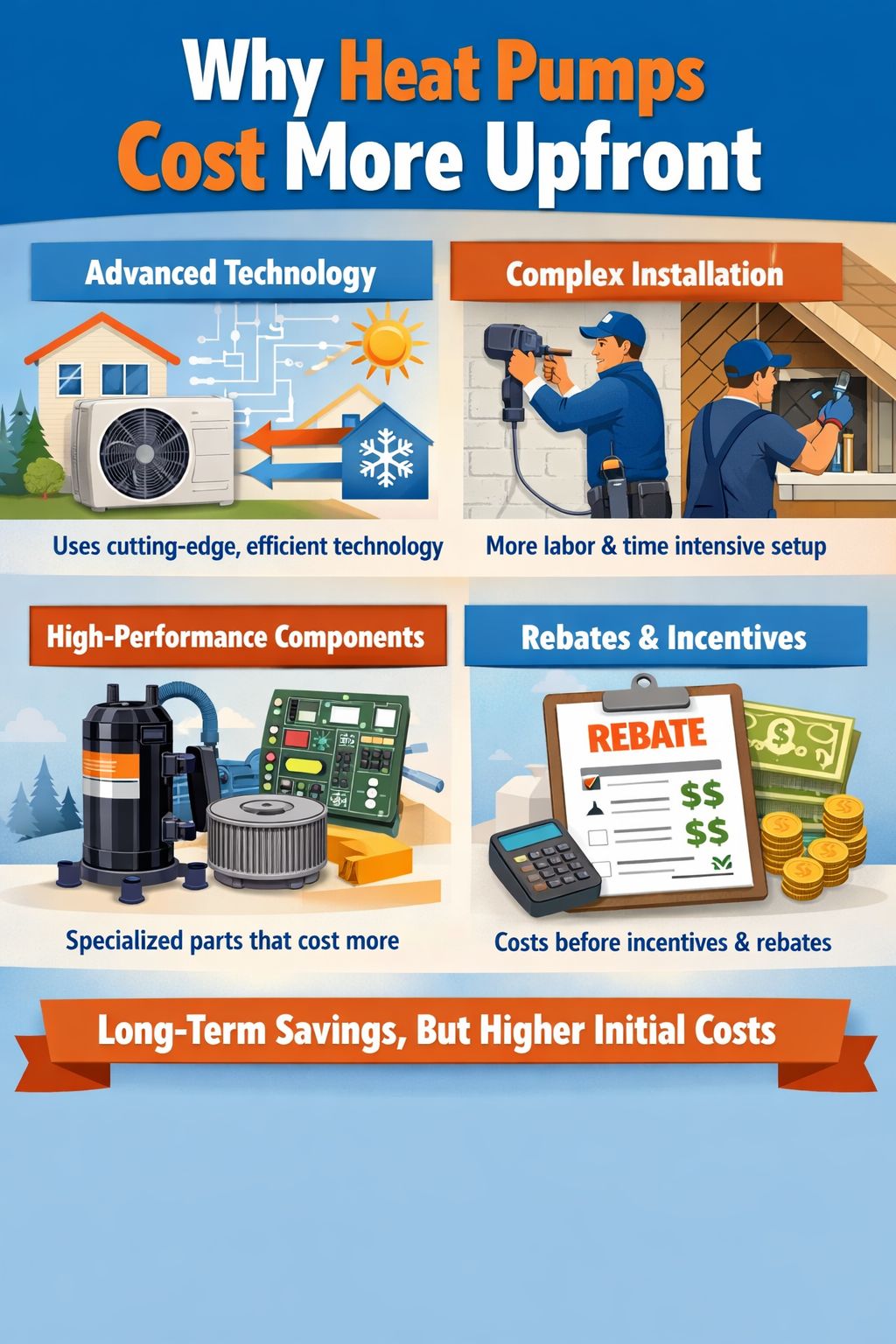
Why Heat Pumps Cost More Upfront
A heat pump system typically costs more to install than a comparable gas boiler, and the reasons go beyond the equipment itself. Many commercial buildings need modifications—larger radiators, underfloor heating loops, or pipes engineered for lower flow temperatures—before a heat pump can function efficiently. In older properties, this often means tearing into walls or floors to accommodate equipment that wasn’t part of the original building design.
Electrical capacity is another factor. Older buildings frequently need panel upgrades to handle the increased electrical load a heat pump requires, and that’s before you factor in the cost of outdoor unit placement, which can be tricky in densely packed urban environments.
How Gas Price Volatility Affects Your Boiler Budget
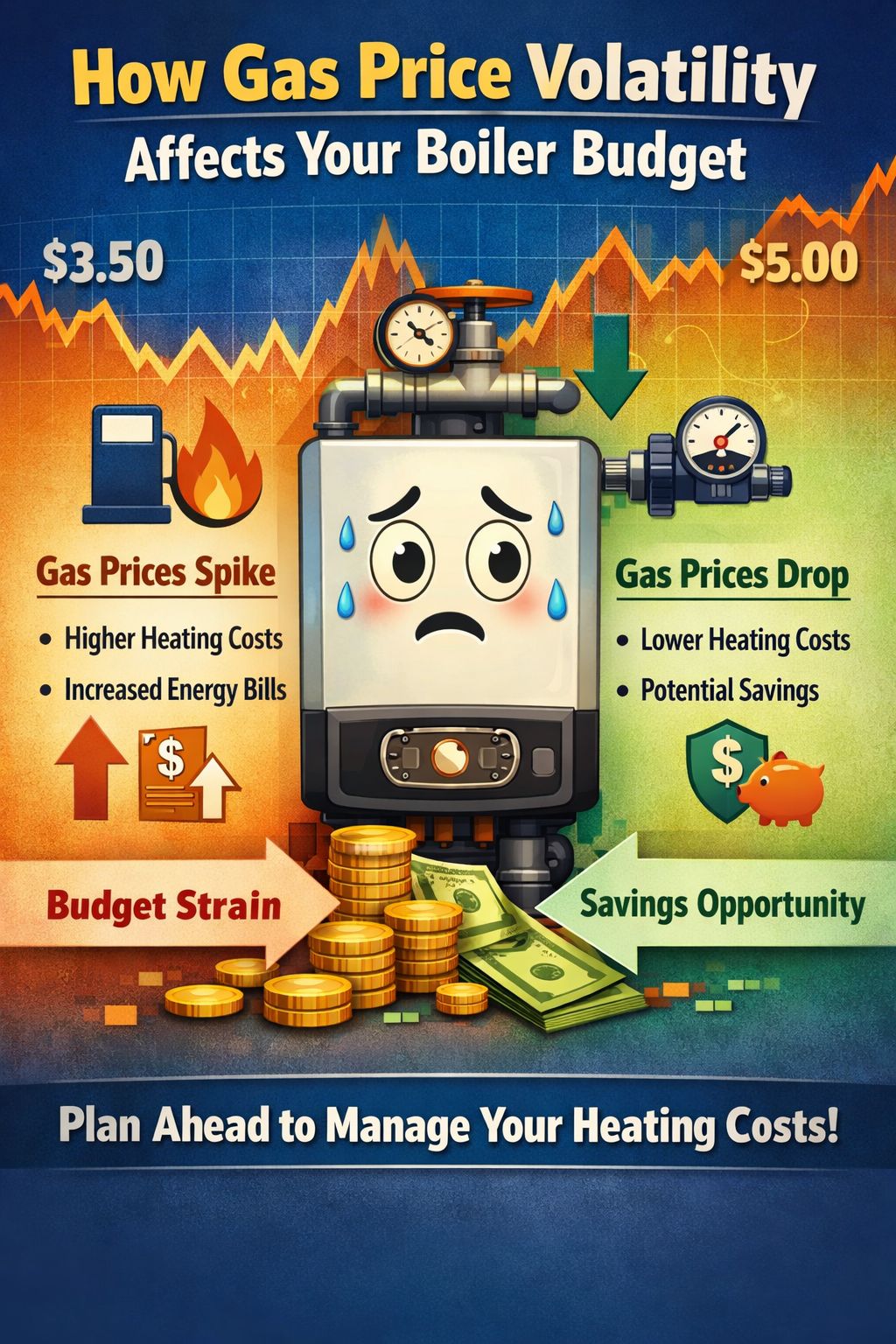
Gas boilers look cheaper on installation day, but their long-term cost depends entirely on fuel pricing—something you don’t control. Natural gas pricing has shown an increasing trend across New York, and that trajectory puts pressure on buildings that rely heavily on gas-fired heating for large portions of the year. For a more sustainable approach, consider setting the path to net zero emissions by exploring alternative heating solutions.
Unlike electricity rates, which are increasingly available through flexible tariff structures, gas pricing tends to spike during high-demand winter months. If your building’s heating costs are already a major line item in your operating budget, that volatility compounds year after year.
Federal Tax Credits and Con Edison Rebates That Cut Installation Costs
The upfront cost gap between heat pumps and boilers narrows considerably once you factor in available incentives. Con Edison’s Clean Heat Program and NYSERDA both offer substantial rebates that can cover a significant portion of heat pump installation costs for qualifying commercial properties. Combined with federal tax credits, these programs can reduce your total installation expense by thousands of dollars.
Before you assume a heat pump conversion is out of budget, it’s worth running the numbers after rebates—not before. Many property managers are surprised at how much the gap closes once incentive programs are applied to the final invoice.
Smart Thermostats and Weatherization: Stretching Your Heat Pump Savings
Pairing a heat pump with smart thermostats and basic weatherization upgrades—better insulation, sealed ductwork, upgraded windows—amplifies the energy savings even further. These add-ons help your system avoid working harder than necessary, which matters most during extreme temperature swings when heat pumps are already managing reduced efficiency. For more insights on creating sustainable systems, explore our guide on building a sustainable future.
Maintenance costs for heat pumps sit at a reasonable average early in the system’s life, though they can climb as the equipment ages. Still, heat pumps generally demand less frequent maintenance than boilers overall, which reduces downtime and the recurring expense of service calls. For a broader perspective on how these systems contribute to carbon emission reduction targets, consider exploring related sustainability goals.
Carbon Emissions: The Decarbonization Case for Property Managers
If your building is subject to emissions reporting requirements, the choice between heat pumps and gas boilers isn’t just financial—it’s regulatory. Heating accounts for more than 20% of global industrial CO2 emissions, and a large share of that still comes from fossil fuel combustion.
Why Heating Accounts for 20% of Global Industrial CO2 Emissions
Gas boilers emit carbon dioxide directly through the combustion process, making them one of the largest contributors to urban air pollution in cities with aging building stock. Every therm of gas burned releases emissions that heat pumps simply don’t produce on-site.
How Heat Pumps Cut Emissions When Paired With Renewable Energy
Heat pumps run on electricity, which means their emissions profile depends on how clean the local power grid is. New York is actively expanding renewable energy sources, making the electricity supplying heat pumps cleaner every year. That’s a meaningful distinction—a heat pump installed today becomes greener over time as the grid decarbonizes, something a gas boiler can never do.
NYC’s 2050 Carbon Neutrality Target and What It Means for Your Building
Heat pumps are positioned as a core technology supporting New York City’s 2050 carbon neutrality target, and Local Law 97 is already pushing larger buildings to reconsider gas-dependent heating systems well ahead of that deadline. If you own or manage a commercial property above the square footage threshold covered by Local Law 97, emissions limits are already shaping your capital planning timeline—whether you’ve started the conversion process or not.
Temperature Output and Performance
Performance under real-world conditions is where the heat pump versus gas boiler debate gets the most practical. Each system has clear strengths depending on what your building actually needs during peak demand.
Why Boilers Deliver Faster, Hotter Heat
Gas boilers excel in scenarios that demand rapid heating or high-temperature output. They remain super dependable in icy conditions, delivering fast warm-up times and consistent high heat even during the coldest days of the year. For buildings with older hydronic systems designed around high-temperature radiators, boilers integrate without requiring a redesign of the distribution system.
Heat Pump Performance Below 10°F
Heat pump efficiency does dip at very low outdoor temperatures, generally below 10°F, which is the main performance tradeoff compared to combustion-based systems. Heat pumps typically deliver lower output temperatures too, which can require larger emitters—think oversized radiators or underfloor heating—to compensate.
Mitsubishi Hyper Heat and Other Cold-Climate Systems That Work at -13°F
Cold-climate technology has closed much of this gap. Systems like Mitsubishi’s Hyper Heat line are engineered to maintain functional efficiency even when outdoor temperatures drop below zero, generating usable heat at temperatures as low as -13°F. For property managers in colder climates who assumed heat pumps weren’t viable for harsh winters, this generation of equipment changes that calculation significantly—heat pumps can now be up to 300% more efficient than gas heating even in regions with serious winter extremes. To learn more about building a sustainable future, consider exploring the path to net zero 2050.
Installation Challenges in Older Buildings
Building age plays one of the biggest roles in determining installation complexity and cost for either system. What works in new construction often requires significant retrofitting in a pre-war property.
Larger Emitters and Pipe Modifications Heat Pumps Require
Because heat pumps operate at lower flow temperatures than boilers, they often need larger radiators or underfloor heating systems to deliver the same comfort level. Retrofitting pipes to handle these lower temperatures is a common and necessary step, and it’s one of the primary reasons heat pump installation costs run higher in older buildings compared to new construction.
Why Gas Boilers Integrate Easily With Existing Radiators
Boilers, by contrast, fit seamlessly into existing infrastructure. They’re compatible with older hydronic systems already in place throughout much of the city’s housing stock, and they integrate effortlessly with radiator systems that have been operating for decades without major modification. For those interested in broader sustainability efforts, consider exploring how cities are setting the path to net-zero 2050.
This compatibility explains why gas boilers remain the structurally dominant heating system in certain building types, including:
- Brooklyn brownstones with original hydronic radiator systems
- Manhattan pre-war buildings with centralized boiler rooms
- Multi-unit residential buildings relying on a single central heat source
- Properties where major plumbing retrofits aren’t financially feasible in the near term
For these buildings, a full heat pump conversion may not be the most realistic first step—though a hybrid approach, which we’ll cover shortly, often bridges the gap.
Electrical Upgrades Needed for Pre-War NYC Buildings
Heat pump installation in older New York buildings frequently requires electrical panel upgrades to support the increased load. This is a cost that’s easy to overlook when comparing quotes, since it’s not always included in the base installation estimate—make sure your contractor itemizes electrical work separately so you’re not caught off guard. For more information, you can explore heat pumps or boilers installation in New York.
Placing Outdoor Heat Pump Units in Row House Neighborhoods
- Outdoor condenser units need adequate clearance for airflow and maintenance access
- Close-row house neighborhoods often have limited space for proper unit placement
- Noise ordinances in dense residential areas can restrict unit location or require sound dampening
- Roof or rear-yard installation may be necessary where street-level placement isn’t viable
Positioning outdoor units correctly matters more than people expect. Poor placement can reduce system efficiency and create maintenance access headaches down the road, so this is worth getting right the first time rather than retrofitting later.
None of these challenges are dealbreakers, but they do affect your installation timeline and budget. A qualified HVAC contractor familiar with your building type should flag these issues during the initial site assessment, not after the equipment arrives.
Maintenance Demands Compared
Ongoing maintenance costs rarely get the same attention as installation pricing, but they add up significantly over a system’s lifespan.
Why Heat Pumps Need Less Frequent Service Calls
- Fewer moving mechanical parts compared to combustion-based boiler systems
- No burner components that require regular cleaning or replacement
- Reduced risk of pressure-related issues common in hydronic boiler systems
- Simplified refrigerant-based cycle with fewer failure points
Boilers, especially older units, are prone to a specific set of recurring problems. Low pressure, noisy pipes, leaks, and burner failure are among the most common issues property managers deal with in aging buildings. Each of these requires a service call, and in older systems, they tend to recur more frequently as components wear down. For those looking to upgrade, exploring sustainable building solutions can be a beneficial step.
Heat pumps sidestep most of these combustion-related failure points entirely, which is part of why they generally demand less frequent maintenance than boilers over the long run. For more insights on sustainable energy solutions, explore our article on building a sustainable future.
That said, heat pump maintenance isn’t zero-cost. Routine service is still necessary to keep refrigerant levels, coils, and electrical components functioning properly.
Rising Maintenance Costs as Heat Pumps Age
Maintenance costs for heat pumps sit at an average level early on but tend to climb as the equipment ages, similar to most mechanical systems. Budgeting for this gradual cost increase—rather than assuming maintenance expenses will stay flat—helps avoid surprises in your long-term operating forecast. For more insights on sustainable building practices, consider building a sustainable future.
Local Law 97 and the 2025 Gas Boiler Ban: What You Need to Know
Regulatory pressure is accelerating the shift away from gas-fired heating in New York, and property managers who haven’t started planning for compliance are running out of runway.
New York has announced a 2025 restriction affecting gas boiler installations, and buildings that fall under Local Law 97’s emissions limits are already facing penalties tied to their carbon output. These two regulatory forces together are reshaping capital improvement timelines across the city’s commercial and multifamily housing stock.
Emissions Limits for Larger Buildings Starting 2024-2025
Local Law 97 sets emissions caps that apply specifically to larger buildings, and those limits tighten in phases through 2024 and 2025. Buildings exceeding their emissions threshold face financial penalties, which creates direct pressure to consider non-gas-dependent heating alternatives sooner rather than later.
If you manage a property that falls under this law’s scope, it’s worth getting an emissions audit now rather than waiting until penalty notices arrive.
Why 60% of NYC Homeowners Are Already Switching to Electric
More than 60% of NYC homeowners are currently considering electric heating options, a shift driven by both regulatory pressure and the long-term cost advantages heat pumps offer. This trend isn’t isolated to single-family properties—commercial and multifamily building owners are facing the same calculus, just at a larger scale. As they look to the future, many are aligning with initiatives aimed at setting the path to net-zero 2050.
Con Edison Clean Heat Program and NYSERDA Incentives
The financial burden of compliance is softened considerably by incentive programs. Con Edison’s Clean Heat Program offers substantial rebates for qualifying heat pump installations, and NYSERDA provides additional funding that, combined with federal tax credits, can meaningfully reduce your total conversion cost. For more information on how these initiatives contribute to building a sustainable future, consider exploring further resources.
These programs exist specifically because the city recognizes that electrification isn’t cheap upfront—so it’s worth exploring every available incentive before assuming a conversion is out of reach financially.
Hybrid Systems: The Middle Ground for Flexible Heating
Not every building needs to choose one system exclusively. Hybrid setups, which combine a gas boiler with a heat pump, are gaining traction quickly across New York as owners look for flexibility without sacrificing reliability during extreme cold.
How Boiler-Heat Pump Combinations Handle Severe Winter Cold
In a hybrid configuration, the heat pump handles the bulk of heating demand during moderate weather, when it operates at peak efficiency. The gas boiler kicks in only during the coldest stretches, when outdoor temperatures drop low enough to reduce heat pump performance. This setup captures most of the efficiency and emissions benefits of a heat pump while retaining the reliability of a boiler for extreme conditions.
Why Brooklyn Townhouses Are Prime Candidates for Hybrid Setups
Brooklyn townhouses, with their existing hydronic infrastructure and limited space for full-scale retrofits, are particularly well-suited to hybrid systems. Rather than ripping out functional radiators and pipes, owners can layer a heat pump into the existing setup, reducing gas consumption without a complete system overhaul.
This approach also spreads out the capital investment over time—property owners can install the heat pump component now and evaluate boiler replacement separately as that equipment ages.
Matching Heating Systems to Your Building Type
There’s no single right answer when it comes to choosing between heat pumps, gas boilers, or a hybrid approach—the right choice depends heavily on your building’s age, layout, and existing infrastructure.
Brooklyn Brownstones and Manhattan Pre-War Buildings: Gas Boilers Remain Standard
Gas boilers remain the most structurally compatible heating system for Brooklyn brownstones and Manhattan pre-war buildings, largely because these properties were built around hydronic radiator systems that boilers serve efficiently without major modification. For more information on boilers installation in New York, visit this resource.
Manhattan Apartments: Ductless Mini-Splits and Air-Source Heat Pumps
Smaller Manhattan apartments benefit from ductless mini-split systems or air-source heat pumps, which fit well into compact spaces without requiring extensive ductwork. Air-source heat pumps are by far the most widely used type across the city, with ground-source systems appearing mostly in luxury buildings or deep retrofit projects where budget allows for the additional infrastructure.
Staten Island Homes: Rising Popularity of Hybrid Configurations
Gas boilers are still widely used in Staten Island homes, but hybrid configurations are becoming increasingly popular as owners look to reduce gas dependency without abandoning the reliability of their existing boiler systems.
Queens and Bronx Multifamily Developments: Heat Pump Adoption Trends
Heat pump installations are climbing in new developments across Queens and the Bronx, though boilers remain the primary heating source for most existing multifamily buildings in these boroughs. New construction gives developers the freedom to design around heat pump infrastructure from the start, which explains why adoption is concentrated in newer projects rather than retrofits. For more insights on sustainable development, explore how building a sustainable future is shaping urban landscapes.
Repair or Replace? Evaluating Your Aging Boiler System
At some point, every boiler reaches a stage where repair no longer makes financial sense compared to replacement.
Common Warning Signs: Low Pressure, Noisy Pipes, and Burner Failure
Watch for low system pressure, unusually noisy pipes, visible leaks, or burner failure—these are the most common red flags signaling your boiler needs professional attention. Catching these issues early can extend the equipment’s usable life, but recurring problems usually indicate the system is nearing the end of its practical lifespan.
Why 20-25 Year Old Systems Call for Replacement Over Repair
Boiler units older than 20 to 25 years are generally better candidates for full replacement rather than continued repair, since the cost of ongoing fixes starts to outweigh the benefit of keeping an aging system running. A local technician can assess whether repair or replacement delivers the best return for your specific equipment and building needs—and at this stage, it’s worth evaluating whether a high-efficiency boiler or a hybrid system makes more sense than a like-for-like replacement.
Air-Source vs. Ground-Source Heat Pumps for Your Property
Not all heat pumps work the same way, and the type you choose affects both installation cost and long-term performance.
Why Air-Source Heat Pumps Dominate NYC Installations
Air-source heat pumps are the most widely installed type across the city, largely because they require less invasive installation than ground-source alternatives. They pull heat from outdoor air rather than requiring underground loops, which makes them a practical fit for urban properties with limited outdoor space.
Ground-Source Systems in Luxury and Deep Retrofit Projects
Ground-source heat pumps show up primarily in luxury apartment buildings or properties undergoing deep retrofit projects, where the budget and space allow for the underground infrastructure these systems require. They typically offer better efficiency than air-source models, but the installation cost and complexity put them out of reach for most standard commercial retrofits. For more on sustainable building practices, explore setting the path to net zero by 2050.
Which System Fits Your Building’s Future?
The decision ultimately comes down to three questions: how old is your building’s existing infrastructure, how exposed is your operating budget to gas price volatility, and how soon will regulatory deadlines like Local Law 97 force your hand. Buildings with modern electrical capacity and flexibility for retrofits are strong candidates for full heat pump conversion, while older properties with established hydronic systems may find a hybrid approach delivers the best balance of cost, reliability, and emissions reduction.
Whatever direction you choose, the incentive landscape—through programs like Con Edison’s Clean Heat Program and NYSERDA funding—makes this the right time to run the numbers on your specific property rather than defaulting to a like-for-like replacement.
Frequently Asked Questions
Can I keep my gas boiler after the 2025 NYC ban takes effect?
Existing gas boilers already installed are generally not required to be removed immediately, but new installations face restrictions under the 2025 policy, and Local Law 97 emissions limits may still create financial pressure to transition sooner.
How much do heat pump rebates actually save on installation?
Combined federal tax credits and Con Edison rebates can reduce total heat pump installation costs by thousands of dollars, though the exact amount depends on your building type and the specific incentive programs you qualify for. For more information on sustainable building practices, you can explore how they contribute to building a sustainable future.
Will a heat pump keep my building warm during a polar vortex?
Cold-climate models like Mitsubishi Hyper Heat systems can generate heat down to -13°F, though efficiency does decrease below 10°F—a hybrid system with boiler backup offers extra reliability during extreme cold snaps.
Do I need to upgrade my electrical panel for a heat pump?
Many older buildings, particularly pre-war properties, require electrical panel upgrades to support the increased load a heat pump system demands.
What’s the payback period for switching from gas to a heat pump?
Payback periods vary based on building size, local energy rates, and available rebates, but lower operating costs combined with incentive programs typically shorten the timeline compared to installation costs without any financial assistance. For a comprehensive guide on setting carbon emission reduction targets, you can explore this resource.
For property managers ready to evaluate their options, Con Edison’s Clean Heat Program offers guidance and rebate support to help determine whether a heat pump, hybrid system, or boiler upgrade makes the most sense for your building.
Why Heat Pumps Cost More Upfront
A heat pump system typically costs more to install than a comparable gas boiler, and the reasons go beyond just the equipment price tag. Many commercial buildings need modifications—larger radiators, underfloor heating loops, or pipes engineered for lower flow temperatures—before a heat pump can operate efficiently. In older properties, this often means opening up walls or floors to accommodate infrastructure that wasn’t part of the original building design. For more on heat pumps or boilers installation in New York, visit this link.
Electrical capacity adds another layer of cost. Older buildings frequently need panel upgrades to handle the increased electrical load a heat pump requires, and outdoor unit placement in dense urban settings can introduce its own installation complications.
How Gas Price Volatility Affects Your Boiler Budget
Gas boilers look cheaper on installation day, but their long-term cost depends entirely on fuel pricing—something no property manager controls. Natural gas pricing has shown an increasing trend across New York, and that trajectory puts sustained pressure on buildings relying heavily on gas-fired heating throughout the year.
Electricity, by comparison, is increasingly available through flexible tariff structures that can work in a heat pump owner’s favor. Gas pricing tends to spike hardest during high-demand winter months—exactly when your building needs heat the most, which compounds the budget impact year after year.
Federal Tax Credits and Con Edison Rebates That Cut Installation Costs
The upfront cost gap narrows considerably once you factor in available incentives. Con Edison’s Clean Heat Program and NYSERDA both offer substantial rebates that can cover a meaningful portion of heat pump installation costs for qualifying commercial properties. Combined with federal tax credits, these programs can reduce your total installation expense by thousands of dollars. For more information, you can explore heat pump installation in New York.
Before assuming a heat pump conversion is out of budget, run the numbers after rebates—not before. Many property managers are surprised at how much the gap closes once incentive programs get applied to the final invoice.
Smart Thermostats and Weatherization: Stretching Your Heat Pump Savings
Pairing a heat pump with smart thermostats and basic weatherization upgrades—better insulation, sealed ductwork, upgraded windows—amplifies energy savings even further. These add-ons keep your system from working harder than necessary, which matters most during extreme temperature swings when heat pumps are already managing reduced efficiency.
Maintenance costs for heat pumps sit at a reasonable average early in the system’s life, though they can climb as equipment ages. Even so, heat pumps generally demand less frequent maintenance than boilers overall, which cuts down on both downtime and the recurring expense of service calls.
Carbon Emissions: The Decarbonization Case for Property Managers
If your building is subject to emissions reporting requirements, the choice between heat pumps and gas boilers isn’t just financial anymore—it’s regulatory. Heating accounts for more than 20% of global industrial CO2 emissions, and a large share of that still comes from burning fossil fuels.
Gas boilers emit carbon dioxide directly through combustion, making them one of the largest contributors to urban air pollution in cities with aging building stock. Every therm of gas burned releases emissions that heat pumps simply don’t produce on-site.
How Heat Pumps Cut Emissions When Paired With Renewable Energy
Heat pumps run on electricity, which means their emissions profile depends on how clean the local power grid is. New York is actively expanding renewable energy sources, making the electricity that powers heat pumps cleaner every year. That’s a meaningful distinction—a heat pump installed today becomes greener over time as the grid decarbonizes, something a gas boiler can never do.
NYC’s 2050 Carbon Neutrality Target and What It Means for Your Building
Heat pumps are positioned as a core technology supporting New York City’s 2050 carbon neutrality target, and Local Law 97 is already pushing larger buildings to reconsider gas-dependent heating well ahead of that deadline. If you manage a property above the square footage threshold covered by Local Law 97, emissions limits are already shaping your capital planning timeline—whether you’ve started the conversion process or not.
Temperature Output and Performance
Performance under real-world conditions is where the heat pump versus gas boiler debate gets the most practical. Each system has clear strengths depending on what your building actually needs during peak demand.
Why Boilers Deliver Faster, Hotter Heat
Gas boilers excel in scenarios that demand rapid heating or high-temperature output. They remain dependable in icy conditions, delivering fast warm-up times and consistent high heat even during the coldest stretches of the year. For buildings with older hydronic systems built around high-temperature radiators, boilers integrate without requiring a redesign of the distribution network.
Heat Pump Performance Below 10°F
Heat pump efficiency does dip at very low outdoor temperatures, generally below 10°F, which remains the main performance tradeoff compared to combustion-based systems. Heat pumps also typically deliver lower output temperatures, which can require larger emitters—oversized radiators or underfloor heating—to compensate.
Mitsubishi Hyper Heat and Other Cold-Climate Systems That Work at -13°F
Cold-climate technology has closed much of this gap in recent years. Systems like Mitsubishi’s Hyper Heat line are engineered to maintain functional efficiency even when outdoor temperatures drop below zero, generating usable heat at temperatures as low as -13°F. For property managers who assumed heat pumps weren’t viable in harsh winters, this generation of equipment changes the calculation—heat pumps can now run up to 300% more efficiently than gas heating even in regions with serious winter extremes.
Installation Challenges in Older Buildings
Building age plays one of the biggest roles in determining installation complexity and cost for either system. What works smoothly in new construction often requires significant retrofitting in a pre-war property.
Larger Emitters and Pipe Modifications Heat Pumps Require
Because heat pumps operate at lower flow temperatures than boilers, they often need larger radiators or underfloor heating systems to deliver the same comfort level. Retrofitting pipes to handle these lower temperatures is a common and necessary step, and it’s one of the primary reasons heat pump installation costs run higher in older buildings than in new construction.
Why Gas Boilers Integrate Easily With Existing Radiators
Boilers, by contrast, fit seamlessly into existing infrastructure. They’re compatible with older hydronic systems already running throughout much of the city’s housing stock, and they integrate effortlessly with radiator systems that have operated for decades without major modification. This compatibility explains why gas boilers remain the structurally dominant heating choice in certain building types, including:
- Brooklyn brownstones with original hydronic radiator systems
- Manhattan pre-war buildings with centralized boiler rooms
- Multi-unit residential buildings relying on a single central heat source
- Properties where major plumbing retrofits aren’t financially feasible in the near term
For these buildings, a full heat pump conversion may not be the most realistic first step—though a hybrid approach, covered shortly, often bridges the gap.
Electrical Upgrades Needed for Pre-War NYC Buildings
Heat pump installation in older New York buildings frequently requires electrical panel upgrades to support the increased load. This cost is easy to overlook when comparing contractor quotes, since it’s not always folded into the base installation estimate—make sure electrical work is itemized separately so you’re not caught off guard mid-project.
Placing Outdoor Heat Pump Units in Row House Neighborhoods
Outdoor condenser units need adequate clearance for airflow and maintenance access, and close-row house neighborhoods often have limited space to accommodate proper placement. Noise ordinances in dense residential areas can further restrict where units go, sometimes requiring sound dampening or rooftop installation when street-level placement isn’t viable.
Positioning outdoor units correctly matters more than most owners expect. Poor placement can reduce system efficiency and create maintenance access headaches down the road, so it’s worth getting right during initial planning rather than retrofitting later.
Maintenance Demands Compared
Ongoing maintenance costs rarely get the same attention as installation pricing, but they add up significantly over a system’s lifespan.
Why Heat Pumps Need Less Frequent Service Calls
- Fewer moving mechanical parts compared to combustion-based boiler systems
- No burner components requiring regular cleaning or replacement
- Reduced risk of pressure-related issues common in hydronic boiler systems
- Simplified refrigerant-based cycle with fewer failure points overall
Boilers, especially older units, are prone to a specific set of recurring problems. Low pressure, noisy pipes, leaks, and burner failure are among the most common issues property managers deal with in aging buildings. Each one requires a service call, and in older systems, these issues tend to recur more frequently as components wear down.
Heat pumps sidestep most of these combustion-related failure points entirely, which is part of why they generally demand less frequent maintenance than boilers over the long run.
Rising Maintenance Costs as Heat Pumps Age
Maintenance costs for heat pumps sit at an average level early on but tend to climb as equipment ages, similar to most mechanical systems. Budgeting for this gradual increase—rather than assuming costs will stay flat—helps avoid surprises in your long-term operating forecast. For those interested in sustainable solutions, consider how setting the path to net-zero can influence your energy choices.
Local Law 97 and the 2025 Gas Boiler Ban: What You Need to Know
Regulatory pressure is accelerating the shift away from gas-fired heating in New York, and property managers who haven’t started planning for compliance are running out of runway. New York has announced a 2025 restriction affecting gas boiler installations, and buildings falling under Local Law 97’s emissions limits are already facing penalties tied to their carbon output.
Emissions Limits for Larger Buildings Starting 2024-2025
Local Law 97 sets emissions caps that apply specifically to larger buildings, and those limits tighten in phases through 2024 and 2025. Buildings exceeding their threshold face financial penalties, which creates direct pressure to consider non-gas-dependent heating alternatives sooner rather than later. If your property falls under this law’s scope, it’s worth getting an emissions audit now rather than waiting for penalty notices to arrive.
Why 60% of NYC Homeowners Are Already Switching to Electric
More than 60% of NYC homeowners are currently considering electric heating options, a shift driven by both regulatory pressure and the long-term cost advantages heat pumps offer. This trend isn’t isolated to single-family properties—commercial and multifamily owners are facing the same calculus, just at a larger scale and with higher stakes. For more insights into sustainable practices, explore our guide on setting the path to net zero.
Con Edison Clean Heat Program and NYSERDA Incentives
The financial burden of compliance is softened considerably by incentive programs. Con Edison’s Clean Heat Program offers substantial rebates for qualifying heat pump installations, and NYSERDA provides additional funding that, combined with federal tax credits, can meaningfully reduce your total conversion cost. These programs exist because the city recognizes electrification isn’t cheap upfront—so it’s worth exploring every available incentive before assuming a conversion is financially out of reach. For more on sustainable goals, you can explore setting sustainable goals for a net-zero future.
Hybrid Systems: The Middle Ground for Flexible Heating
Not every building needs to choose one system exclusively. Hybrid setups, which combine a gas boiler with a heat pump, are gaining traction quickly across New York as owners look for flexibility without sacrificing reliability during extreme cold.
How Boiler-Heat Pump Combinations Handle Severe Winter Cold
In a hybrid configuration, the heat pump handles the bulk of heating demand during moderate weather, when it operates at peak efficiency. The gas boiler kicks in only during the coldest stretches, when outdoor temperatures drop low enough to reduce heat pump performance. This setup captures most of the efficiency and emissions benefits of a heat pump while retaining boiler reliability for extreme conditions.
Why Brooklyn Townhouses Are Prime Candidates for Hybrid Setups
Brooklyn townhouses, with their existing hydronic infrastructure and limited space for full-scale retrofits, are particularly well-suited to hybrid systems. Rather than ripping out functional radiators and pipes, owners can layer a heat pump into the existing setup, reducing gas consumption without a complete system overhaul. This approach also spreads capital investment over time—owners can install the heat pump component now and evaluate boiler replacement separately as that equipment ages. This aligns with the broader goal of building a sustainable future.
Matching Heating Systems to Your Building Type
There’s no single right answer when choosing between heat pumps, gas boilers, or a hybrid approach—the right choice depends heavily on your building’s age, layout, and existing infrastructure. For a deeper understanding of how these choices contribute to building a sustainable future, consider exploring additional resources.
Brooklyn Brownstones and Manhattan Pre-War Buildings: Gas Boilers Remain Standard
Gas boilers remain the most structurally compatible heating system for Brooklyn brownstones and Manhattan pre-war buildings, largely because these properties were built around hydronic radiator systems that boilers serve efficiently without major modification.
Replacing that infrastructure wholesale would often cost more than the heating upgrade itself justifies, which is why most owners in these building types stick with boiler upgrades or hybrid additions rather than full conversions.
Manhattan Apartments: Ductless Mini-Splits and Air-Source Heat Pumps
Smaller Manhattan apartments benefit from ductless mini-split systems or air-source heat pumps, which fit well into compact spaces without requiring extensive ductwork. Air-source heat pumps are by far the most widely used type across the city, with ground-source systems appearing mostly in luxury buildings or deep retrofit projects where budget allows for the additional infrastructure.
These systems also offer the bonus of heating and cooling from a single unit, which matters for buildings where space for separate air conditioning infrastructure simply doesn’t exist. For more insights on creating efficient and space-saving systems, explore our guide on building a sustainable future.
Staten Island Homes: Rising Popularity of Hybrid Configurations
Gas boilers are still widely used in Staten Island homes, but hybrid configurations are becoming increasingly popular as owners look to reduce gas dependency without abandoning the reliability of their existing boiler systems. As homeowners explore these options, they are also considering setting sustainable goals for a net-zero future.
Queens and Bronx Multifamily Developments: Heat Pump Adoption Trends
Heat pump installations are climbing in new developments across Queens and the Bronx, though boilers remain the primary heating source for most existing multifamily buildings in these boroughs. New construction gives developers the freedom to design around heat pump infrastructure from the start, which explains why adoption concentrates in newer projects rather than retrofits of older buildings.
For owners of existing multifamily properties in these boroughs, a phased hybrid conversion often makes more sense than an immediate full switch, especially if Local Law 97 compliance timelines allow room to plan the transition carefully.
Repair or Replace? Evaluating Your Aging Boiler System
At some point, every boiler reaches a stage where repair no longer makes financial sense compared to replacement. Knowing the warning signs—and the age threshold where replacement becomes the smarter investment—saves both money and unplanned downtime. For those looking to build a sustainable future, understanding when to upgrade your systems is essential. Learn more about building a sustainable future.
Common Warning Signs: Low Pressure, Noisy Pipes, and Burner Failure
- Persistent low system pressure that won’t hold after repeated repressurizing
- Unusually noisy pipes, including banging, gurgling, or whistling sounds
- Visible leaks around joints, valves, or the boiler housing itself
- Burner failure or inconsistent ignition during startup cycles
Catching these issues early can extend a boiler’s usable life by a few years in some cases, buying time to plan a more strategic replacement rather than a rushed emergency swap.
Recurring problems, however, usually signal the system is nearing the end of its practical lifespan rather than hinting at a single fixable fault. To ensure a sustainable future, it’s crucial to consider building a sustainable future with efficient solutions.
If your maintenance technician is visiting more than once or twice a season for the same type of issue, that frequency alone is often a stronger signal than the boiler’s actual age.
Why 20-25 Year Old Systems Call for Replacement Over Repair
Boiler units older than 20 to 25 years are generally better candidates for full replacement rather than continued repair, since the cost of ongoing fixes starts to outweigh the benefit of keeping an aging system running. A local technician can assess whether repair or replacement delivers the best return for your specific equipment—and at this stage, it’s worth evaluating whether a high-efficiency boiler or a hybrid system makes more sense than a like-for-like swap.
Air-Source vs. Ground-Source Heat Pumps for Your Property
Not all heat pumps work the same way, and the type you choose affects both installation cost and long-term performance significantly.
Why Air-Source Heat Pumps Dominate NYC Installations
Air-source heat pumps are the most widely installed type across the city, largely because they require less invasive installation than ground-source alternatives. They pull heat from outdoor air rather than requiring underground loops, making them a practical fit for urban properties with limited outdoor space and tighter installation budgets.
Ground-Source Systems in Luxury and Deep Retrofit Projects
Ground-source heat pumps show up primarily in luxury apartment buildings or properties undergoing deep retrofit projects, where budget and space allow for the underground infrastructure these systems require. They typically offer better efficiency than air-source models, since ground temperatures stay more stable year-round than outdoor air temperatures.
Still, the installation cost and complexity put ground-source systems out of reach for most standard commercial retrofits, which is why air-source remains the practical default for the vast majority of NYC properties.
Which System Fits Your Building’s Future?
The decision ultimately comes down to three questions: how old is your building’s existing infrastructure, how exposed is your operating budget to gas price volatility, and how soon will regulatory deadlines like Local Law 97 force your hand. Buildings with modern electrical capacity and flexibility for retrofits are strong candidates for full heat pump conversion, while older properties with established hydronic systems may find a hybrid approach delivers the best balance of cost, reliability, and emissions reduction.
Whatever direction you choose, the incentive landscape makes this the right time to run the numbers on your specific property rather than defaulting to a like-for-like replacement.
Frequently Asked Questions
These are the questions property managers ask most often when weighing a switch from gas to electric heating, such as understanding the differences between carbon offsets and credits.
Can I keep my gas boiler after the 2025 NYC ban takes effect?
Existing gas boilers already installed generally aren’t required to be removed immediately, but new installations face restrictions under the 2025 policy.
Local Law 97 emissions limits may still create financial pressure to transition sooner, especially for larger buildings already close to their emissions threshold.
How much do heat pump rebates actually save on installation?
Combined federal tax credits and Con Edison rebates can reduce total heat pump installation costs by thousands of dollars for qualifying properties.
The exact savings depend on your building type, size, and which specific incentive programs you qualify for, so it’s worth getting a detailed quote before assuming the cost is out of reach.
Will a heat pump keep my building warm during a polar vortex?
Cold-climate models like Mitsubishi Hyper Heat systems can generate heat down to -13°F, though efficiency does decrease below 10°F—pairing with a hybrid boiler backup offers extra reliability during extreme cold snaps.
Do I need to upgrade my electrical panel for a heat pump?
Many older buildings, particularly pre-war properties, require electrical panel upgrades to support the increased load a heat pump system demands.
This cost should be itemized separately in your installation quote, since it’s not always included in the base heat pump equipment price.
What’s the payback period for switching from gas to a heat pump?
Payback periods vary based on building size, local energy rates, and available rebates, but lower operating costs combined with incentive programs typically shorten the timeline compared to installation costs without any financial assistance.
Buildings facing Local Law 97 penalties may see an even faster effective payback once avoided fines are factored into the calculation.
Building Type | Recommended System | Primary Reason |
|---|---|---|
Brooklyn Brownstones | Gas boiler or hybrid | Existing hydronic infrastructure |
Manhattan Pre-War Buildings | Gas boiler or hybrid | Centralized boiler room compatibility |
Manhattan Apartments | Air-source heat pump / mini-split | Compact space, dual heating-cooling function |
Staten Island Homes | Hybrid system | Reduces gas use while retaining reliability |
Queens/Bronx New Construction | Full heat pump conversion | Infrastructure designed from the ground up |
Luxury/Deep Retrofit Properties | Ground-source heat pump | Higher efficiency, budget supports complexity |
Use this as a starting point for conversation with your HVAC contractor, not a final decision—every building has quirks that a site visit will reveal faster than any general guide. For more insights on setting sustainable goals, consider exploring how to set sustainable goals for a net-zero future.
For property managers ready to evaluate their options, Con Edison’s Clean Heat Program offers rebate guidance to help determine whether a heat pump, hybrid system, or boiler upgrade makes the most sense for your building.

How to Evaluate Depackager Suppliers: RFQ Checklist for Procurement Teams
Choosing the right depackager supplier involves more than just comparing prices. A robust RFQ checklist covering specs, capacity, delivery, and more can streamline vendor evaluations. Avoid missteps that lead to mismatched equipment and costs by focusing on total ownership cost and a detailed, weighted scoring model…

On-Site Food Digesters vs. Biogas Systems: Which Is Better for Hotels and Hospitality?
Spread the loveHave you ever watched the bins pile up behind your hotel kitchen and wondered where all that money is going? Spoiled ingredients, plate scraps, and prep waste add up fast. And you pay steep fees to haul it all to the landfill. Here’s a number that surprised me the first time I saw […]

Using the Commercial Insurance Renewal Process to Get the Best Cover and Deals
Initiating your commercial insurance renewal process early provides opportunities to negotiate terms, ensure coverage aligns with your business’s evolving needs, and explore competitive quotes. This proactive approach can protect against premium increases and coverage gaps, ultimately helping to secure the best deals for your business…

10 Ways to Avoid Wastage of Food
Discover how cutting food waste can save your family up to $1,500 annually. Learn key strategies for meal planning, proper storage, and understanding expiration labels. Implement these tips to keep your kitchen organized and your wallet full while reducing your environmental footprint…