If you’re stuck choosing between affiliate marketing and dropshipping, the short answer is this: pick affiliate marketing if you want low risk and flexibility, pick dropshipping if you want more control and higher profit ceilings.
Both models let you start an online business without warehouses, employees, or a business degree. But they work in completely different ways, and the “best” one depends entirely on how much control you want, how much time you can invest, and whether you already have an audience. Before diving into either path, it helps to review a breakdown of proven online business models so you can see where your skills and resources actually line up.
Key Takeaways
- Affiliate marketing works best for beginners who already have an audience and want low-risk, low-maintenance income from promoting other brands’ products.
- Dropshipping gives you more control over pricing, branding, and customer experience, but it demands more hands-on work and startup effort.
- Dropshipping profit margins (10-40%) typically beat affiliate commission rates (5-15%), though neither model guarantees quick money.
- Your choice of the best online business model should match your available time, risk tolerance, and whether you’d rather create content or manage a store.
- Keep reading to see the exact costs, commission rates, and profit margins behind each model so you can make an informed decision instead of guessing.
Which Business Model Actually Fits Your Goals
There’s no universal “best” online business model — there’s only the model that best fits your current situation. Someone with 50,000 Instagram followers and zero interest in customer service shouldn’t start a dropshipping store. Someone who loves building brands and doesn’t mind answering emails shouldn’t waste time trying to build an audience from scratch for affiliate marketing.
Both paths share the same appeal: low barriers to entry, no need for a marketing degree, and no requirement to hold physical inventory. You can start either one part-time, from a laptop, with a few hundred dollars or less. The differences show up in how much control you keep, how fast you get paid, and how much daily management the business demands.
Here’s what separates the two models at a glance:
- Audience dependency: Affiliate marketing leans heavily on an existing, trusting audience. Dropshipping doesn’t require one to get started.
- Control: Dropshippers set their own prices and build their own brand. Affiliates have no say in product quality, pricing, or customer service.
- Responsibility: Affiliates walk away once someone clicks their link. Dropshippers handle customer support, refunds, and supply chain hiccups.
- Profit potential: Dropshipping margins can reach 20-40% on well-positioned products, while affiliate commissions typically sit at 5-15%.
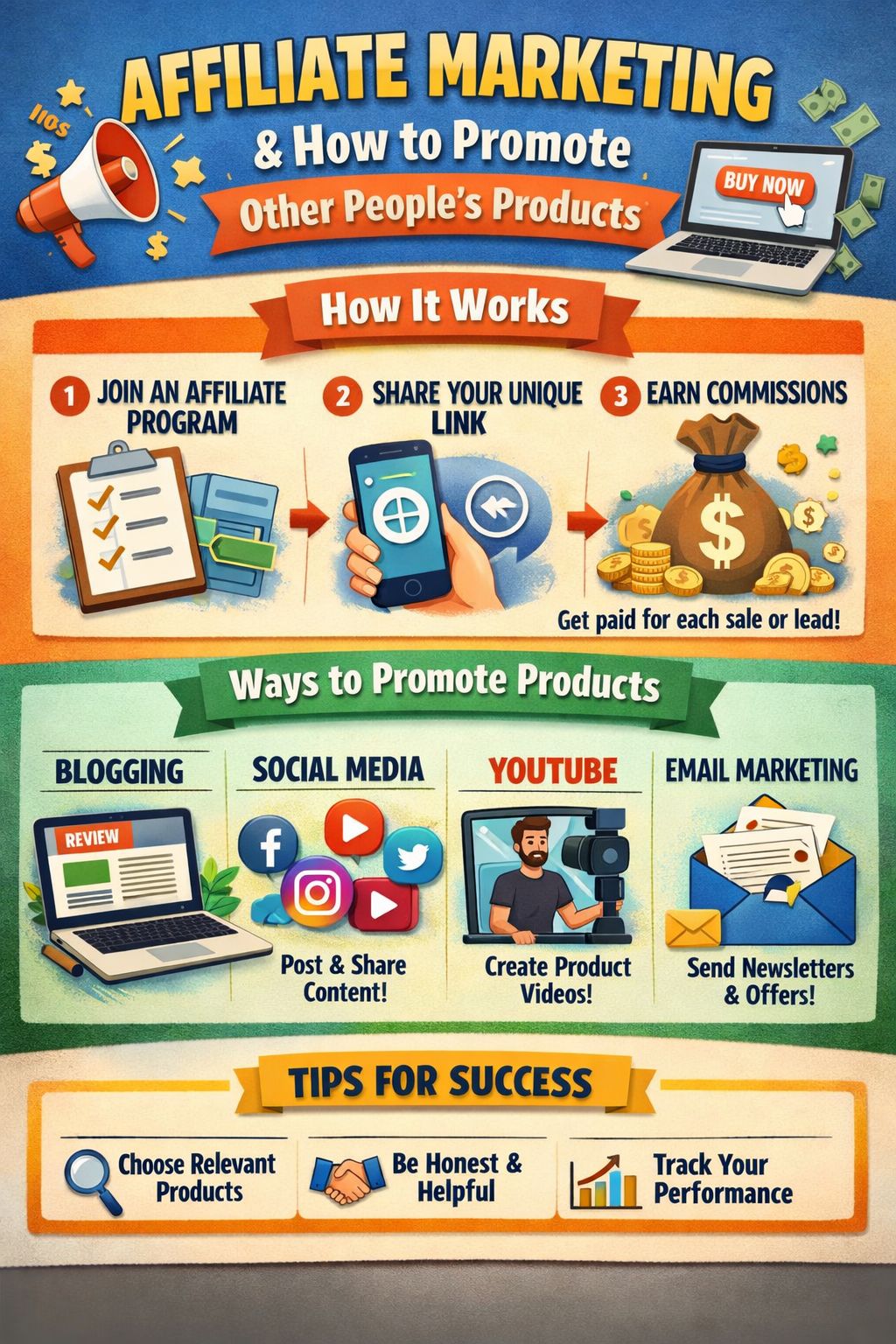
Affiliate Marketing Means Promoting Other People’s Products
Affiliate marketing is a program where brands pay you to mention their products on social media, blogs, or newsletters. You get paid based on sales or traffic you generate — not a flat fee for your time. The mechanism is simple: you receive a unique affiliate link, and that link tracks every visitor who clicks through and buys, so the brand knows exactly who to credit.
An affiliate marketer doesn’t need to be a celebrity or an expert. You just need to be officially attached to a program and willing to recommend products your audience will genuinely find useful. Most affiliates fall into one of three camps: publishers, influencers, or content creators who’ve built even a small, engaged following.

The appeal is obvious once you see the numbers. More than 81% of brands now run affiliate programs, which means opportunities exist in nearly every niche imaginable — fitness, finance, tech, beauty, you name it. You’re not inventing a product or managing inventory; you’re connecting people who trust you with products they already want.
Where affiliate marketing gets tricky is control. You can’t change the product’s price, improve its quality, or fix a bad customer service experience. If the brand you’re promoting stumbles, your reputation can take the hit right alongside theirs.
Dropshipping Means Running Your Own Online Store
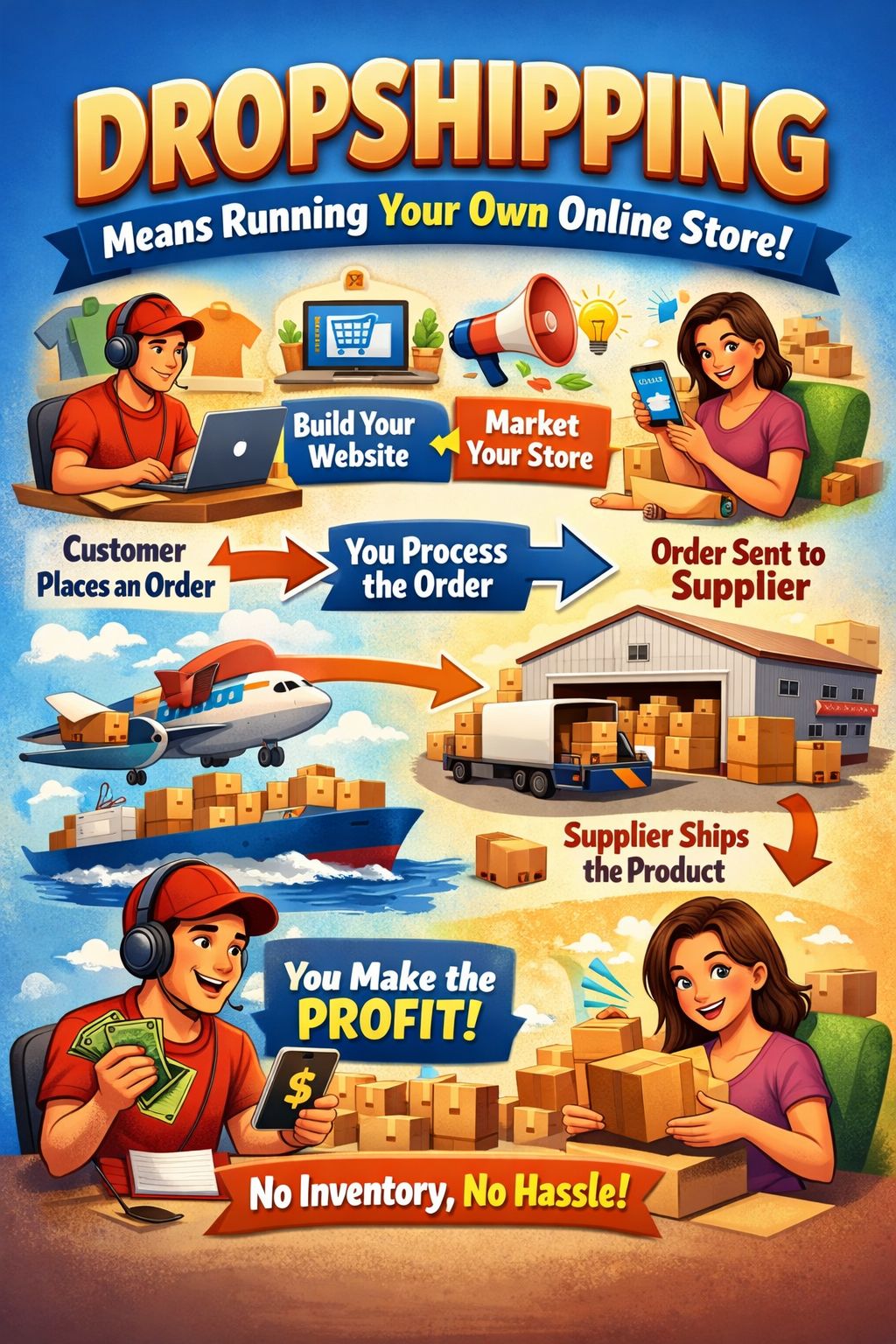
Dropshipping flips the script. Instead of promoting someone else’s store, you build your own. A customer orders a product from your website, and instead of shipping it yourself, you forward that order to a third-party supplier who manufactures and ships it directly to the customer’s door.
You never touch the product. You never store inventory. But you do control the storefront, the branding, the pricing, and the marketing message — which means dropshipping functions much more like a traditional retail business, just without the warehouse.
Quick Snapshot of Costs, Effort, and Profit Potential
Before going deeper into each model, it helps to see them side by side. The table below pulls together the core numbers beginners need to compare realistically.
Factor | Affiliate Marketing | Dropshipping |
|---|---|---|
Typical startup cost | Free to low (social account or blog) | ~AUD $42/month platform fee plus domain |
Commission/profit margin | 5-15% commission | 10-40% profit margin |
Audience required to start | Yes, existing trust helps significantly | No, can build traffic from scratch |
Customer service responsibility | None | Full responsibility |
Control over pricing | None | Full control |
How Affiliate Marketing Works
The entire affiliate marketing process hinges on one thing: the tracking link. When you join a brand’s affiliate program, you get assigned a unique URL. That link carries a tracking code, often stored as a browser cookie, which tells the merchant exactly which sales originated from your recommendation.
Once someone clicks your link and completes a purchase within the cookie window — often 30 days or less — you earn your commission automatically. No invoicing, no chasing payments, no negotiating. The system runs in the background while you focus on creating content that drives clicks, unlike the traditional methods explained in this article on key differences.
There are three distinct approaches to affiliate marketing, and understanding which one fits your style matters more than people realize.
Unattached Affiliate Marketing Explained
Unattached affiliate marketing means you have zero personal connection to the product or service you’re promoting. You haven’t used it, you don’t have expertise in its niche, and you’re not vouching for it based on experience. This approach usually relies on paid traffic — Google Ads or Facebook Ads pointing straight at an affiliate link.
It’s the most hands-off version of affiliate marketing, but it also carries the least credibility. Without a personal audience backing you, success depends almost entirely on your ad targeting and budget.
Related Affiliate Marketing Explained
Related affiliate marketing sits in the middle ground. You’re connected to the product through your niche or industry, even if you haven’t personally used it. A tech blogger promoting a software tool they’ve researched but never subscribed to would fall into this category. There’s more credibility here than the unattached approach, since your audience trusts your industry knowledge even without firsthand product experience.
Involved Affiliate Marketing Explained
Involved affiliate marketing is the gold standard for building trust. You’ve actually used the product, you’re confident in recommending it, and your audience knows it. This approach shows up constantly in services-based marketing — think creators promoting Audible, Squarespace, or Skillshare after genuinely using the platforms themselves. It takes longer to build this kind of credibility, but it converts better because people can tell the recommendation is real.
How Dropshipping Works
Dropshipping runs on a simple supply chain shortcut: you never hold the product. Instead, you act as the storefront and marketing engine while a supplier handles manufacturing, packaging, and shipping.
The Order Fulfillment Process Step-by-Step
Every dropshipping sale follows the same basic sequence, whether you’re selling phone cases or skincare products.
- A customer visits your online store and places an order.
- Your store automatically (or manually) forwards that order to your third-party supplier.
- The supplier manufactures or pulls the item from their own stock.
- The supplier ships the product directly to your customer under your store’s branding, if supported.
- You keep the difference between what the customer paid you and what the supplier charged you.
That last step is where your profit margin lives. Because you set the retail price on your own site, you control the markup — which is exactly why dropshipping margins tend to outperform affiliate commissions when products are positioned well.
Why Dropshipping Apps Like Shopify Collective and Syncee Matter
Manually contacting suppliers one by one used to be the biggest headache in dropshipping. That’s largely solved now. Modern dropshipping apps such as Shopify Collective, DropCommerce, and Syncee connect your store directly to supplier networks, letting you browse thousands of vetted products and import them with a few clicks.
These platforms also automate the order-forwarding process, so when a customer buys from your store, the order routes to the correct supplier without you lifting a finger. That automation is what makes dropshipping genuinely manageable for a beginner working solo, rather than something that requires a full operations team.
Affiliate Marketing: 5 Key Benefits for Beginners
Affiliate marketing earns its reputation as one of the most beginner-friendly online business models for a reason — the barriers that stop most people from starting a business simply don’t apply here.
1. Low Startup Costs and Free Program Access
You can start affiliate marketing with nothing more than a social media account or a simple blog. Most affiliate programs cost nothing to join, which means your biggest investment isn’t money — it’s time spent creating content people actually want to read or watch.
2. No Inventory or Shipping Responsibilities
You’ll never pack a box, print a shipping label, or worry about a warehouse running out of space. The brand handles production, storage, and delivery. Your only job is pointing people toward the product through your unique link.
3. Passive Income That Compounds Over Time
Here’s where affiliate marketing gets interesting for people playing the long game. Once you publish a blog post or video with your affiliate links embedded, that content keeps working for you. A product review you wrote two years ago can still generate commissions today, long after you’ve moved on to other projects.
4. Flexibility to Promote Across Any Niche
Nothing locks you into one category forever. You can recommend kitchen gadgets this month and pivot to software tools next month without restructuring your entire business. If a product stops converting or a brand changes its terms, you simply swap it out for something else your audience will respond to.
5. Minimal Financial Risk
Without inventory to purchase or long-term contracts to sign, your downside stays limited. Worst case, you spend time creating content that doesn’t convert — but you’re never stuck holding unsold products or owing money to a supplier.
Affiliate Marketing: 5 Drawbacks You Need to Know
None of this makes affiliate marketing a flawless model. The same hands-off structure that makes it low-risk also strips away your control over nearly everything that matters to a customer’s experience. For a comprehensive comparison, you can check out this affiliate marketing comparison guide.
1. Zero Control Over Product Quality or Pricing
You’re promoting someone else’s product, which means you have no say in how it’s made, priced, or delivered. If the brand raises prices or cuts corners on quality, you can’t fix it — you can only stop promoting it. For a detailed comparison of affiliate marketing platforms, check out this affiliate marketing comparison guide.
2. Commission Rates Can Change Without Warning
Commission structures aren’t guaranteed to stay fixed. Amazon Associates, one of the largest affiliate programs in the world, has reduced its commission rates multiple times over the years, cutting into affiliates’ income overnight with little notice. Build your business expecting this kind of change, not hoping it won’t happen.
3. Your Reputation Is Tied to Someone Else’s Product
When you recommend a product, your audience trusts your judgment. If that product’s quality slips or it stops performing as promised, your credibility takes the hit right alongside the brand’s. You end up managing a reputation risk for a business you don’t actually run.
This is why involved affiliate marketing — actually using the product before recommending it — tends to protect your reputation better than unattached promotion ever will.
4. Short Cookie Windows Can Cost You Sales
Most affiliate cookies expire within 30 days or less. If someone clicks your link today but doesn’t buy until six weeks later, you likely won’t get credit for that sale. This cookie lifespan directly limits how much of your traffic actually converts into income, even when your content is driving genuine interest.
5. Growing Trust Takes Time, Not a Quick Win
Unlike dropshipping, where a single ad can drive a sale almost immediately, affiliate marketing depends on an audience that trusts your recommendations. Building that trust takes months, sometimes years, of consistent content and engagement. Anyone expecting fast money from affiliate marketing is setting themselves up for disappointment.
Dropshipping: 6 Key Benefits for Beginners
Dropshipping trades some of affiliate marketing’s simplicity for more control — and for a lot of beginners, that trade-off is exactly what they’re looking for.
1. No Audience Required to Get Started
Unlike affiliate marketing, dropshipping doesn’t require you to already have followers who trust you. You can launch a store from zero and drive traffic through ads, SEO, or social media from day one.
2. Full Control Over Branding and Customer Experience
This is dropshipping’s biggest draw for people who want to build something lasting. You control the website design, the product descriptions, the marketing messages, and the overall customer journey. Over time, this control lets you build real brand equity — something you simply can’t do while promoting someone else’s products.
That brand equity matters more than it sounds. A recognizable brand earns repeat customers, word-of-mouth referrals, and eventually the kind of loyalty that doesn’t depend on constant advertising. For businesses considering digital tools, understanding the impact of AI image generators vs. stock photos on brand image can be crucial.
You’re also free to shape every touchpoint, from your checkout page to your email follow-ups, in ways that reflect your own values and voice rather than a brand’s pre-approved guidelines. For those considering the best platform to facilitate this personalization, comparing WarriorPlus vs. JVZoo can offer insights into fees, payouts, and features that matter.
3. Higher Profit Margins of 20-40%
Because you set your own retail prices, smart product selection and positioning can push profit margins into the 20-40% range for many products — well above the 5-15% commissions typical in affiliate marketing.
4. Easy to Test and Swap Products
If a product isn’t selling, you’re not stuck with it. Dropshipping lets you add new items to your store without major upfront investment, so you can respond to shifting trends faster than a traditional retailer carrying physical inventory ever could.
This flexibility turns product testing into a low-stakes experiment rather than a financial gamble, which matters a lot when you’re still figuring out what your audience actually wants.
5. Work From Anywhere, Any Schedule
A dropshipping business runs entirely online, which means you can manage it from a laptop anywhere with an internet connection. Whether you want to keep it as a small side hustle or scale it into a full-time operation, the structure adapts to your ambitions.
That said, “flexible” doesn’t mean “hands-off” — someone still has to answer customer emails and monitor orders, even if you’re doing it from a beach instead of an office. For a deeper understanding of the different online business models, check out this comparison of WarriorPlus and JVZoo.
6. Access to Thousands of Verified Suppliers
Finding reliable manufacturers used to be the hardest part of starting a dropshipping business. Apps like Shopify Collective, DropCommerce, and Syncee have solved that problem by giving you direct access to thousands of vetted suppliers, letting you import products into your store in minutes instead of weeks. For those interested in affiliate marketing as an alternative or complementary business model, check out this comparison guide on ClickBank and ShareASale.
Dropshipping: 5 Drawbacks You Need to Know
The control dropshipping offers comes with a price: more responsibility lands on your shoulders when things go wrong, and plenty of things can go wrong in a supply chain you don’t directly manage.
1. Thin Margins in Competitive Commodity Markets
Popular products attract plenty of sellers, and when everyone’s selling the same item sourced from marketplaces like AliExpress, prices get driven down fast. Margins shrink in these crowded categories, sometimes to the point where the profit barely justifies the effort.
2. You Own All Customer Service Issues
When a customer has a question or a complaint, they come to you — not your supplier. You’ll need systems in place to handle inquiries, process returns, and resolve complaints efficiently, because none of that responsibility transfers to the manufacturer shipping the product.
3. Supplier Stock and Shipping Delays Hurt Your Business
Your business is only as reliable as your supplier. If they run out of stock or ship an order late, that failure lands directly on your store’s reputation, even though it’s entirely outside your control. Understanding the key differences between traditional tools and modern solutions can help mitigate some of these risks.
Poor communication from a supplier makes this worse. If they’re slow to respond when a problem comes up, you’re left scrambling to explain delays to frustrated customers without any real answers to give them.
This is why vetting suppliers carefully before listing their products matters so much — a cheap product from an unreliable source can cost you far more in refunds and bad reviews than it ever earns in profit.
4. More Upfront Setup Work Before Your First Sale
Dropshipping requires more initial effort than affiliate marketing. Before you make a single sale, you need product listings, payment processing, and supplier relationships all set up and working together smoothly.
None of this is complicated on its own, but it does mean your first sale takes longer to reach than it would if you simply joined an affiliate program and started sharing links today.
5. High Competition From Other Dropshippers
Dropshippers rarely have exclusive relationships with their suppliers, which means other store owners can list the exact same products you’re selling. That competition often pushes profit margins lower than what you’d see in traditional retail.
Standing out requires more than just listing popular items — it means investing in branding, customer experience, and marketing that gives shoppers a reason to buy from you instead of the next identical store.
Real Numbers: Commission Rates and Profit Margins
Numbers settle arguments better than opinions do, so here’s how the earning potential actually compares between the two models. For a detailed affiliate marketing comparison guide, you can explore the differences in commission rates and profit margins.
Affiliate commissions vary significantly by platform and product category, but a few well-known programs illustrate the range you can expect.
Typical Affiliate Commission Rates by Platform
Program | Typical Commission Rate |
|---|---|
Amazon Associates | Up to 12% |
eBay Partner Network | 4% on most qualifying transactions |
General affiliate programs | 5% to 50%+ depending on product and merchant |
Notice the spread here. A high-ticket software subscription might pay a 50% commission, while a physical product sold through Amazon Associates might only pay a few percentage points. This is exactly why researching commission structures before committing to a niche matters so much.
Dropshipping’s earning potential works differently because you’re not relying on someone else’s fixed commission rate — you control the price. For those interested in exploring other online business models, comparing WarriorPlus vs. ClickBank can offer insights into different payout structures.
The general range for dropshipping profit margins sits between 10% and 30%, with well-positioned products in strong niches reaching 20-40%. The difference comes down to how you price your products relative to what you’re paying suppliers, and how well you avoid oversaturated commodity categories where price wars crush margins.
Typical Dropshipping Profit Margins
Your actual margin depends heavily on three factors: your niche, your audience, and your overhead costs like advertising spend. A niche product with low competition and strong branding can comfortably sit at the higher end of that 40% range, while a commodity item competing against dozens of identical stores might barely clear 10%. For those exploring different business models, you might find it useful to compare affiliate marketing platforms like ClickBank to see what pays most in 2026.
Startup Costs Breakdown for Each Model
Low barriers to entry don’t mean zero costs. Both models have expenses worth planning for before you launch, even if those expenses stay modest compared to traditional brick-and-mortar businesses.
What It Costs to Start Affiliate Marketing
At its simplest, affiliate marketing can start for free — a social media account and a willingness to create content is technically enough to join most programs. But scaling beyond the bare minimum typically introduces a few costs: business registration if you’re formalizing the venture, email marketing software to nurture your audience, and possibly a content management system or paid ad space to extend your reach.
Some affiliates also factor in office space or accounting software once their income grows large enough to justify the expense, though these costs stay entirely optional in the early stages. The real investment, as it’s been said before, is your time — building the kind of audience that trusts your recommendations enough to click and buy.
What It Costs to Start Dropshipping
Dropshipping asks for a slightly bigger upfront commitment than affiliate marketing, though it’s still far cheaper than opening a physical store. As of 2025, Shopify plans start at AUD $42 per month when billed annually, and you’ll likely want a domain name too, which runs anywhere from AUD $14 to $50 per year depending on the extension you choose.
Beyond the platform itself, budget for product validation through test orders, marketing costs like Facebook Ads or Google Ads, and possibly directory fees for accessing supplier databases. In Australia, registering your business name adds another $44 for one year or $102 for three years. None of these costs are large individually, but they add up faster than affiliate marketing’s near-zero entry point.
Where Affiliate Marketing and Dropshipping Overlap
Strip away the differences and you’ll find both models share the same DNA. Neither requires a marketing degree, significant starting capital, or a warehouse full of inventory. Both let you start small, test your approach, and scale only once something is working. And both can become genuine sources of passive-ish income if you’re willing to put in consistent effort upfront — growing your audience or traffic tends to pay off in higher sales no matter which path you’ve chosen.
5 Core Differences That Determine Your Best Fit
Once you look past the surface-level similarities, five specific differences tend to decide which model actually makes sense for your situation. These aren’t minor details — they shape your day-to-day experience running the business.
Think of these as filters. Run your own goals and constraints through each one, and the right model usually becomes obvious. For a detailed comparison of affiliate marketing platforms, check out this affiliate marketing comparison guide.
1. Audience Requirements
Affiliate marketing leans on an existing audience that already trusts you. Dropshipping doesn’t require that foundation — you can build traffic from zero using SEO, ads, or social content as you go.
2. Pricing Control
Dropshippers set their own retail prices and keep the markup. Affiliates earn whatever commission rate the brand decides, with zero negotiating power over that number.
3. Legal and Consumer Protection Obligations
Dropshippers must abide by consumer protection laws like Australian Consumer Law, since they’re the retailer of record. Affiliates face different legal requirements — mainly disclosure rules preventing misleading or deceptive conduct, requiring clear disclosure of any commercial relationship with the brand being promoted.
4. Payment Speed and Reliability
Affiliate programs sometimes attach payment thresholds or irregular schedules, meaning you might wait longer for your commission than expected. For instance, understanding the best ClickBank and ShareASale affiliate marketing programs can help you navigate these challenges. Dropshippers collect payment directly from customers at checkout, giving them more immediate control over cash flow.
5. Daily Time Commitment
Affiliate marketing can become largely hands-off once your content is published and ranking. Dropshipping demands ongoing attention — orders need monitoring, customer messages need answers, and supplier relationships need managing.
Difference | Affiliate Marketing | Dropshipping |
|---|---|---|
Audience needed | Yes, ideally | No |
Pricing control | None | Full control |
Legal obligations | Disclosure rules | Consumer protection law |
Payment reliability | Can be irregular | Direct and immediate |
Daily involvement | Low once set up | Ongoing |
Notice how these differences cluster around one theme: control versus convenience. The more control you want over pricing, branding, and customer experience, the more responsibility you take on in return.
There’s no “easier” winner here — just a trade-off that suits different personalities and goals.
Why Online Shopping Trends Favor Both Models
Consumer behavior has shifted dramatically in favor of online shopping, and that shift benefits both affiliate marketers and dropshippers equally. In 2024, 1 in 5 Australian households shopped online weekly — a sharp jump from just 5% in 2018. More than half of surveyed shoppers now research products directly on Google, eBay, and Amazon before buying, which creates natural entry points for both business models to capture attention.
Social Media’s Growing Role in Product Discovery
Social platforms have become genuine product discovery engines, not just entertainment feeds. 64% of 18-24-year-olds research products on Instagram, while 67% of 26-35-year-olds turn to Facebook for the same purpose. Overall, 64% of users say they find new brands and products through social media, and 60% of 18-25-year-olds report discovering products they eventually purchased through social platforms.
Influencer Trust Versus Celebrity Endorsement
Here’s a number worth paying attention to if you’re leaning toward affiliate marketing: 85% of consumers place more faith in influencer-sponsored posts than in celebrity endorsements. That trust translates directly into action, with 21% of users reporting they bought a product based on an influencer’s recommendation. Among Gen Z specifically, 77% follow social media influencers, compared to 50% of Millennials — meaning the audience for affiliate-style recommendations keeps growing, not shrinking.
How to Choose the Right Model for Your Personality
Numbers and comparisons only go so far. At some point, the decision comes down to how you actually like to work. Some people thrive on building systems and brands from scratch. Others do their best work creating content and letting relationships with their audience do the heavy lifting.
Ask yourself honestly which of these descriptions sounds more like you, because forcing yourself into the wrong model rarely ends well — even if the numbers looked good on paper.
Pick Dropshipping If You Like Building Brands and Systems
If you enjoy the idea of designing a storefront, choosing products, and watching a brand grow into something recognizable, dropshipping rewards that instinct. You’ll need patience for the operational side — supplier communication, customer service, order tracking — but you get full creative and financial control in return.
Pick Affiliate Marketing If You Like Creating Content
If writing blog posts, filming videos, or building a social following energizes you more than managing a store, affiliate marketing plays to that strength. You skip the operational headaches entirely and focus purely on creating content your audience trusts enough to act on.
Either choice can succeed — the failure usually comes from picking a model that fights against your natural working style rather than one that fits it.
The Bottom Line on Starting Your First Online Business
Both affiliate marketing and dropshipping offer legitimate, low-barrier paths into online business ownership, but they ask different things of you. Affiliate marketing rewards patience and content creation with lower risk and less daily management. Dropshipping rewards hands-on effort and brand-building with higher profit ceilings and full pricing control.
The best online business model isn’t the one with better statistics — it’s the one you’ll actually stick with long enough to see results.
Frequently Asked Questions
Can You Do Affiliate Marketing and Dropshipping at the Same Time?
Yes, plenty of online entrepreneurs run both simultaneously. A common approach involves using a dropshipping store as the main business while adding affiliate links for complementary products you don’t personally sell, creating two income streams from the same audience.
Which Model Makes Money Faster for Beginners?
Dropshipping often generates a first sale faster because you control the pricing and can drive paid traffic directly to your store. Affiliate marketing typically takes longer to produce income since it depends on building an audience that trusts your recommendations before they’ll click and buy.
That said, “faster” doesn’t mean “easier.” Dropshipping’s quicker sales cycle comes with more upfront setup work, while affiliate marketing’s slower start requires less initial effort to launch.
Do You Need a Business License for Either Model?
Dropshipping typically requires business registration since you’re operating as a retailer, including obligations under consumer protection laws like Australian Consumer Law. Affiliate marketing has lighter formal requirements, though registering as a business becomes worthwhile once your income grows and you want access to things like business banking or tax deductions.
Which Model Has Lower Risk If You Fail?
Affiliate marketing carries lower financial risk overall. Consider the reasons why:
- No inventory investment means no unsold stock to write off.
- No long-term contracts or subscriptions tied to physical products.
- Minimal monthly overhead beyond optional marketing tools.
- You can pivot to a new product or niche without restructuring your entire business.
Dropshipping’s risk is still relatively low compared to traditional retail, but platform fees, ad spend, and supplier issues mean your potential losses run higher than affiliate marketing’s worst-case scenario.
If minimizing risk matters more to you than maximizing profit ceiling, affiliate marketing is the safer starting point.
Can You Switch From Affiliate Marketing to Dropshipping Later?
Absolutely, and it’s a common progression. Many successful dropshippers started as affiliates, using that experience to learn what products their audience responds to before investing in their own store and inventory relationships.
The audience and content skills you build through affiliate marketing transfer directly into dropshipping marketing efforts, giving you a head start most brand-new dropshippers don’t have.
Whichever direction you take first, the skills rarely go to waste — they simply compound as you move from one model to the other.
Whichever path you choose, getting clear guidance early makes the difference between a false start and real momentum, and that’s exactly where [COMPANY] steps in to help beginners build their first profitable online business.
Affiliate marketing and dropshipping are two popular online business models that offer opportunities for entrepreneurs to generate income. While both have their advantages and disadvantages, it’s essential to understand the key differences before deciding which one to pursue. For instance, affiliate marketing involves promoting products and earning a commission on sales, whereas dropshipping requires managing inventory and shipping products directly to customers. If you’re interested in learning more about the financial aspects, you might want to check out this comparison of payouts on different platforms.

Heat Pumps vs. Gas Boilers for Commercial Buildings: Efficiency, Costs & Decarbonization Fit
Switching from gas boilers to heat pumps involves more than just cost. Efficiency, regulatory compliance, and long-term savings are crucial factors. With Local Law 97 penalties looming and NYC’s 2025 gas boiler restrictions, choosing between these systems impacts both finances and environmental goals…

How to Evaluate Depackager Suppliers: RFQ Checklist for Procurement Teams
Choosing the right depackager supplier involves more than just comparing prices. A robust RFQ checklist covering specs, capacity, delivery, and more can streamline vendor evaluations. Avoid missteps that lead to mismatched equipment and costs by focusing on total ownership cost and a detailed, weighted scoring model…

On-Site Food Digesters vs. Biogas Systems: Which Is Better for Hotels and Hospitality?
Spread the loveHave you ever watched the bins pile up behind your hotel kitchen and wondered where all that money is going? Spoiled ingredients, plate scraps, and prep waste add up fast. And you pay steep fees to haul it all to the landfill. Here’s a number that surprised me the first time I saw […]

Using the Commercial Insurance Renewal Process to Get the Best Cover and Deals
Initiating your commercial insurance renewal process early provides opportunities to negotiate terms, ensure coverage aligns with your business’s evolving needs, and explore competitive quotes. This proactive approach can protect against premium increases and coverage gaps, ultimately helping to secure the best deals for your business…