Read on for our list of 10 Ways to Avoid Food Waste, but to put it very briefly, to reduce food waste, plan your meals and create shopping lists to buy only what you need, store food correctly to extend its life, and use leftovers for new meals or freeze them.
Key Takeaways: 10 Ways to Avoid Wastage of Food
- The average family of four throws away nearly $1,500 worth of food annually – reducing waste can save you up to $56 per week.
- Creating a detailed meal plan before shopping can reduce impulse purchases and prevent overbuying perishable items.
- Proper food storage techniques can extend freshness by days or even weeks, dramatically reducing what ends up in the trash.
- Understanding date labels is crucial – “best by” doesn’t mean “unsafe after” and many foods remain perfectly good beyond these dates.
- Food waste apps like NoWaste can help you track expiration dates and inventory what’s in your kitchen to prevent forgotten food.
Every time you toss that wilted lettuce or mouldy bread, you’re literally throwing money in the trash. Food waste is a silent budget killer that affects nearly every household. By implementing smarter shopping, storage, and consumption habits, you can keep more food on your plate and more money in your wallet. The team at SaveSmart Financial knows that financial wellness starts with everyday decisions, including how you manage your kitchen and grocery budget.
Food waste doesn’t just impact your finances – it has far-reaching environmental consequences too. Each item that ends up in the landfill represents wasted water, energy, labour, and resources that went into producing it. By taking simple steps to reduce food waste, you’re not only being financially savvy but environmentally responsible as well.

The Real Cost of Food Waste: More Than Just Dollars
The statistics are staggering. According to the EPA, American families throw away approximately 30-40% of their food supply. That translates to roughly $1,500 wasted annually for a family of four. Imagine what you could do with that extra money – a weekend getaway, debt payments, or contributions to your emergency fund.
Beyond the immediate financial impact, food waste creates a substantial environmental burden. When food decomposes in landfills, it produces methane, a greenhouse gas 25 times more potent than carbon dioxide. The resources used to grow, process, package, and transport food that ultimately goes uneaten represent a significant environmental footprint. Water, land, energy, and labour are all wasted when food ends up in the trash.
The good news? Small, consistent changes in how you plan, shop, store, and prepare food can dramatically reduce waste. These adjustments don’t require special skills or significant time investments – just mindfulness and a few simple systems. For instance, adopting sustainable depackaging practices can significantly contribute to reducing food waste and its environmental impact.

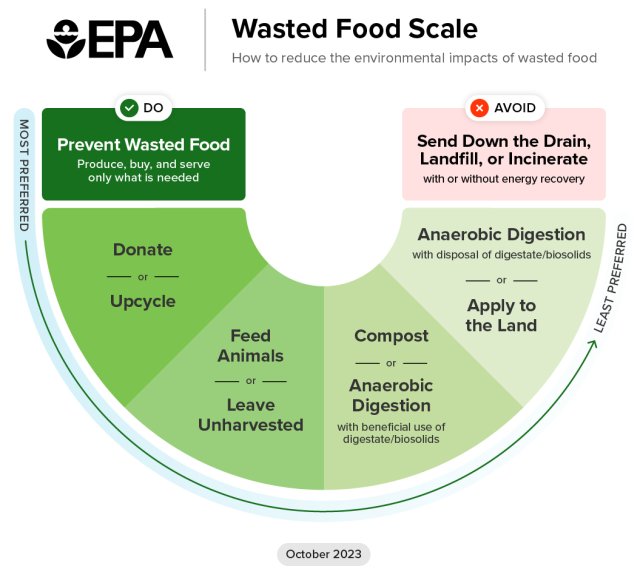
“Wasted Food Scale | US EPA 10 Ways to Avoid Wastage of Food” from www.epa.gov and used with no modifications.
Smart Shopping: The Foundation of Food Waste Prevention
Preventing food waste begins before you ever set foot in the grocery store. Strategic planning and shopping habits form the foundation of an efficient kitchen where food gets used rather than wasted. Taking time to plan your shopping trips can significantly reduce impulse purchases of items that may languish in your refrigerator.
1. Create a Meal Plan Before Shopping
Meal planning might sound tedious, but it’s actually one of the most powerful tools for reducing food waste and saving money. Before heading to the store, check what you already have in your pantry, refrigerator, and freezer. Build your weekly meals around ingredients that need to be used up first. This “shop your kitchen” approach ensures you’re not buying duplicates of items you already have. For flexibility, plan 4-5 specific meals for the week rather than 7, leaving room for unexpected events, leftovers, or creative improvisation with what’s on hand. To further boost efficiency and sustainability, consider exploring industrial depackaging solutions as part of your food management strategy.
2. Shop With a Detailed List (And Stick to It)
A vague shopping list like “vegetables” or “snacks” often leads to overbuying or purchasing items that don’t work together in meals. Instead, create specific lists organised by store section (produce, dairy, etc.) with exact quantities needed. Research shows shoppers who use detailed lists waste up to 40% less food than those who shop without one. When shopping, resist the temptation of sales on perishable items unless they fit into your meal plan. 10 Ways to Avoid Wastage of Food Remember: a bargain isn’t a bargain if half of it ends up in the trash. For more insights, consider exploring sustainable practices to reduce waste.
3. Buy Only What You’ll Actually Eat
Be realistic about your cooking habits and schedule when shopping. Those exotic ingredients for a complicated recipe might seem appealing in the moment, but if your week is packed with late meetings, they’ll likely go unused. Consider your family’s true eating patterns rather than aspirational ones. Buying in bulk can save money, but only if you’ll consume everything before it spoils. For perishables like produce, smaller quantities purchased more frequently often result in less waste and fresher meals.
4. Choose Imperfect Produce
Those oddly-shaped carrots or slightly blemished apples are perfectly nutritious and delicious, yet they’re often overlooked by shoppers. Many stores now offer “imperfect” produce at discounted prices – a win for your budget and for reducing food waste in the supply chain. These cosmetically challenged fruits and vegetables contain the same nutrients as their picture-perfect counterparts. Some grocery chains have formal “ugly produce” programs, while farmers’ markets often sell these items at reduced prices near the end of the day.
Storage Solutions That Extend Food Life
Proper storage can dramatically extend the life of your groceries, sometimes by weeks. Investing a little time to store foods correctly when you return from shopping pays off in reduced waste and better-tasting ingredients. Most food spoilage occurs because items are stored improperly or forgotten until they’re past their prime.
5. Learn Proper Food Storage Techniques
Different foods require different storage environments to maintain freshness. Tomatoes lose flavour in the refrigerator but last longer on the counter. Leafy greens stay crisp when wrapped in slightly damp paper towels before being placed in a container. Herbs like parsley and cilantro can be stored upright in water like flowers. Investing in specialised storage containers with proper ventilation for fruits and vegetables can extend freshness by days or even weeks. Take 15 minutes after grocery shopping to prep and properly store everything rather than just shoving bags into the refrigerator.
Quick Storage Guide for Maximum Freshness/ 10 Ways to Avoid Wastage of Food
Avocados, tomatoes, bananas, potatoes: Cool, dry place (not refrigerator)
Berries: Unwashed in breathable container in refrigerator
Leafy greens: Wrapped in damp paper towel in container
Herbs: Stems in water like flowers, with loose bag over top
Cheese: Wrapped in parchment then loosely in plastic
6. Use the FIFO Method (First In, First Out)
Grocery stores use this simple but effective inventory management system – and you should too. When unpacking groceries, move older products to the front of your refrigerator or pantry and place newer purchases behind them. This simple habit ensures you use items before they spoil. Consider creating an “eat soon” bin or designated shelf in your refrigerator for items that need to be consumed quickly. Making these items visible and accessible dramatically increases the chances they’ll be used before spoiling, and is number 6 of our 10 Ways to Avoid Wastage of Food.
7. Food Waste
Date labels like “sell by,” “use by,” and “best before” are mostly manufacturers’ suggestions for peak quality – not safety warnings. The USDA confirms that many foods remain perfectly safe and nutritious well past these dates. “Best by” dates indicate optimal flavour, not when food becomes unsafe. “Sell by” dates are inventory management tools for retailers, not expiration dates for consumers. Trust your senses instead – if food looks and smells normal, it’s usually fine to eat even past its date label. This knowledge alone can prevent countless items from being unnecessarily discarded.
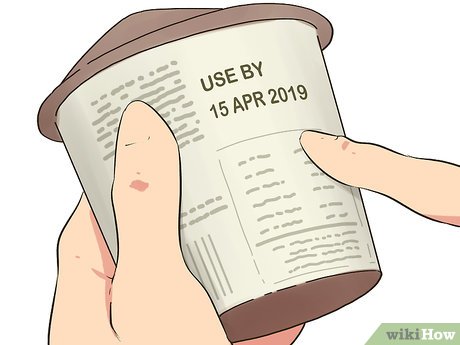
“Easy Ways to Read Expiration Dates: 8 …” from www.wikihow.com and used with no modifications.
Creative Cooking to Use Everything
Creativity in the kitchen is your secret weapon against food waste. Learning to repurpose leftovers, use overlooked parts of ingredients, and improvise with what you have on hand can transform potential waste into delicious meals. This approach not only saves money but often results in some of the most flavorful and satisfying dishes.
8. Transform Leftovers Into New Meals
Leftovers don’t have to mean eating the same meal repeatedly. Yesterday’s roast chicken can become today’s chicken salad sandwiches or tomorrow’s enchiladas. Leftover rice works perfectly in fried rice, rice pudding, or added to soup. The key is thinking of leftovers as ingredients rather than complete dishes that must be reheated as-is. For more 10 Ways to Avoid Wastage of Food ideas, explore ways to prevent food waste at home.
Dedicate one night a week as “clean out the fridge” night, where you get creative with whatever needs using up. Some of the world’s most beloved dishes – like French toast, bread pudding, and ribollita soup – were originally created as ways to use up ingredients that would otherwise go to waste. For more ideas, check out these ways to reduce food waste at home.
9. Use Vegetable Scraps in Stocks and Broths
Those vegetable ends, peels, and stems you typically toss have hidden culinary potential. Keep a container in your freezer for collecting clean onion ends, carrot peels, celery leaves, herb stems, and other vegetable scraps. Once full, simmer these scraps with water for an hour or two to create a flavorful homemade vegetable stock that’s far superior to store-bought versions. This zero-waste approach saves money on purchased stock while utilising parts of vegetables that would otherwise end up in the trash. The resulting broth serves as an excellent base for soups, risottos, and sauces.
10. Embrace “Root-to-Stem” and “Nose-to-Tail” Cooking
Modern cooking often focuses on only the most premium parts of ingredients, but traditional cuisines worldwide use every edible portion. Broccoli stems can be peeled and sliced for stir-fries, beet greens are delicious sautéed, and citrus peels can be candied or zested for flavour. For meat eaters, learning to cook with less common cuts not only reduces waste but often results in more flavorful, economical meals. Chicken frames make excellent stock, beef cheeks become tender in slow cooking, and organ meats are nutrient powerhouses. These overlooked 10 Ways to Avoid Wastage of Food parts are often the most affordable at markets while being just as nutritious as their more popular counterparts.
Preservation Methods Worth Mastering
When you find yourself with more fresh food than you can eat before it spoils, preservation techniques can save the day. Modern preservation doesn’t require special equipment or extensive knowledge – just a few simple techniques can help you extend the life of foods by weeks or even months. These methods have been used for generations to prevent waste during times of abundance.
Freezing Basics for Longer Shelf Life
Your freezer is perhaps the most powerful tool in preventing food waste. Almost anything can be frozen if done properly. Bread freezes beautifully when well-wrapped and can be toasted directly from frozen. Ripe bananas can be peeled and frozen for future smoothies or baking. Milk, eggs (cracked and beaten), and even avocados can be frozen successfully. For maximum quality, blanch vegetables briefly before freezing, and store items in airtight containers with as little air as possible. Label everything with contents and date to prevent mystery packages that get overlooked. Even leftover wine can be frozen in ice cube trays for future cooking.
Simple Pickling and Fermenting
Basic pickling requires only vinegar, water, salt, and spices – no special equipment needed. Quick pickles (also called refrigerator pickles) can transform excess vegetables into tangy condiments that last for weeks. Cucumber, carrots, radishes, and onions all pickle beautifully and add bright flavour to meals while also being one of our 10 Ways to Avoid Wastage of Food.
Fermenting goes a step further by utilising beneficial bacteria to preserve foods while creating complex flavours and beneficial probiotics. Simple fermentation projects like sauerkraut require nothing more than cabbage, salt, and a clean jar. These ancient preservation techniques not only prevent waste butalso often make foods more nutritious and digestible.
Tech Tools and Community Solutions
In our digital age, technology offers innovative solutions to help track food inventory, plan meals, and connect with others to reduce waste collectively. These modern tools complement traditional waste-reduction strategies and can be particularly helpful for busy households. When individual efforts are combined with community initiatives, the impact on reducing food waste becomes even more significant.
Food Waste Apps That Help You Save
Several smartphone apps can help you manage your food inventory and reduce waste. Apps like NoWaste and FreshPantry let you scan products as you shop and alert you when items are approaching their use-by dates. Meal planning apps can generate shopping lists based on recipes, ensuring you buy only what you need. Some apps even suggest recipes based on ingredients you already have, helping you use up items before they spoil. For businesses and community organisations, apps like Too Good To Go and Food for All connect consumers with restaurants and stores offering discounted food that would otherwise be thrown away at closing time.
Community Food Sharing
Neighbourhood food sharing has become increasingly popular through formal and informal networks. If you’ve grown too much produce or can’t use groceries before leaving town, consider using apps like OLIO that facilitate food sharing among neighbours. Community fridges and pantries are appearing in many cities, allowing people to donate excess food items for others who can use them. Some community gardens have swap tables where gardeners can exchange excess produce. These 10 Ways to Avoid Wastage of Food sharing systems prevent perfectly good food from being wasted while building community connections and helping those who might be facing food insecurity.
When Prevention Fails: Responsible Disposal
Despite our best efforts, some food waste is inevitable. However, sending food scraps to the landfill should be your last resort. When food decomposes in landfills, it creates methane, a potent greenhouse gas that contributes significantly to climate change. Fortunately, there are much better options for handling the food waste you can’t avoid.
Composting returns nutrients to the soil rather than sealing them in landfills. This natural recycling process transforms food scraps into rich soil amendment that benefits gardens and reduces the need for chemical fertilizers. Whether you garden or not, composting is one of the most environmentally beneficial ways to handle unavoidable food waste.
Many municipalities now offer curbside compost collection alongside regular recycling services, making responsible disposal easy for residents. If your city doesn’t offer this service, check if community gardens or farmers’ markets accept compost donations. Some grocery stores and coffee shops also collect compostable waste for commercial composting facilities that can handle a wider range of items than home systems. For more ideas on reducing waste, you can explore 10 ways to reduce food waste.
Composting Basics for Beginners
Starting a home composting system doesn’t have to be complicated or smelly. For outdoor composting, a simple bin that allows airflow is all you need. Layer “browns” (dry leaves, newspaper, cardboard) with “greens” (fruit and vegetable scraps, coffee grounds, grass clippings) and keep slightly moist. Avoid adding meat, dairy, or oils to home compost systems. For apartment dwellers, compact indoor systems like worm bins (vermicomposting) or bokashi fermentation systems can process food scraps without odors or pests. These small-scale options can fit under a sink or on a balcony while still diverting significant waste from landfills and creating nutrient-rich soil for houseplants or community gardens.
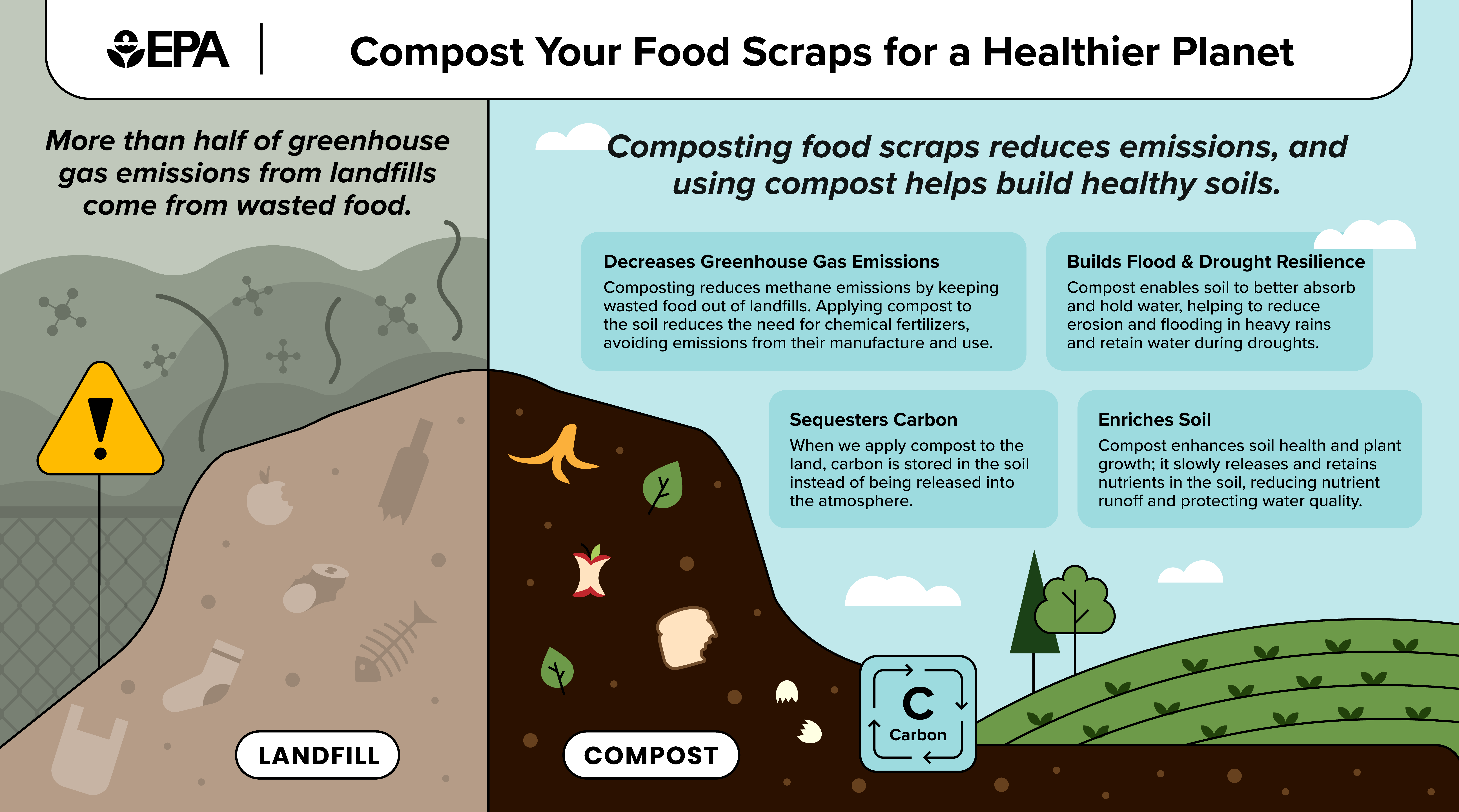
“Composting At Home | US EPA” from www.epa.gov and used with no modifications.
Small Changes, Big Impact: Your Next Steps
Reducing food waste doesn’t require a complete lifestyle overhaul – start with one or two changes that seem most manageable for your household. Begin by conducting a waste audit: for one week, keep track of everything you throw away to identify patterns and problem areas.
Then choose specific strategies that address your particular challenges, whether that’s better meal planning, improved storage, or learning to repurpose leftovers. Remember that imperfect progress is still progress. Each apple saved from the trash, each container of leftovers eaten instead of forgotten, and each food scrap composted rather than landfilled represents both environmental and financial savings. At SaveSmart Financial, we believe these small daily choices are the foundation of long-term financial wellness and environmental stewardship. For more ideas, check out ways to reduce food waste at home.
Frequently Asked Questions About 10 Ways to Avoid Wastage of Food
Food waste reduction often raises practical questions about safety, storage, and implementation. Here are answers to some of the most common questions people have when trying to reduce waste in their kitchens. These practical tips can help you navigate specific situations that often lead to unnecessary food waste.
Many people are surprised to learn just how much food waste impacts their budget and how simple changes can lead to significant savings. The following questions address specific areas where confusion often leads to unnecessary waste.
How much money can the average family save by reducing food waste?
- The average American family of four throws away approximately $1,500 worth of food annually
- Reducing waste by half could save around $750 per year
- Weekly savings can amount to $30-$56, depending on household size and current waste levels
- Additional savings come from lower garbage disposal costs and fewer shopping trips
- Energy savings from more efficient refrigerator use and less cooking of unused food
These savings are conservative estimates based on USDA data. Many families report even greater financial benefits once they implement comprehensive waste reduction strategies. The savings tend to compound over time as better habits become ingrained and systems are refined to work with your specific household patterns. For more on how to boost efficiency and sustainability, check out industrial depackaging solutions.
For many households, the money saved by reducing food waste becomes a meaningful contribution to emergency savings or other financial goals. This represents one of the easiest areas to find “hidden money” in most family budgets without feeling deprived or making significant lifestyle changes.
Beyond direct food cost savings, reducing waste often leads to healthier eating habits as people become more conscious of what they purchase and prepare. This can result in additional long-term health cost savings that, while harder to quantify immediately, provide substantial financial benefits over time.
What foods are most commonly wasted in households?
Fresh produce tops the list of wasted foods in most households, with leafy greens, berries, and herbs being particularly problematic due to their short shelf life. Bread and baked goods follow closely behind, often growing mouldy before being fully consumed. Milk and dairy products frequently get pushed to the back of refrigerators and forgotten until past their prime. Leftovers from restaurant meals or home cooking represent another major category of waste, often forgotten in refrigerators until they’re no longer appealing or safe to eat. Identifying your household’s most commonly wasted items helps you focus your waste-reduction efforts where they’ll have the greatest impact.
Can I freeze milk, cheese, and other dairy products?
Yes, most dairy products can be frozen successfully with a few adjustments. Milk can be frozen for up to three months, though it may separate slightly when thawed (shake well to recombine). Hard and semi-hard cheeses freeze well when grated or cut into small pieces and stored in airtight containers. Butter freezes excellently for up to six months when well-wrapped. Yoghurt can be frozen, though the texture changes somewhat, making previously frozen yoghurt better for smoothies or baking than eating plain. Soft cheeses like cream cheese and cottage cheese can be frozen but may become crumbly, making them better for cooked applications after thawing. The key to successfully freezing dairy is proper wrapping to prevent freezer burn and using appropriate containers that allow for expansion. For more tips on reducing food waste, check out Preventing Wasted Food at Home.
Is it safe to eat food past its “best by” date?
Yes, in most cases, food remains perfectly safe and nutritious well past the “best by” date on packaging. These dates are manufacturers’ suggestions for peak quality, not safety cut-offs. With the exception of infant formula, date labels on food products are not federally regulated safety indicators. The USDA and FDA confirm that most foods remain safe to consume after these dates, provided they have been stored properly and show no signs of spoilage. Trust your senses instead – if food looks normal, smells normal, and (if you take a small taste) has a normal flavour, it’s generally fine to eat regardless of the date printed on the package.
Different date labels have different meanings, which contributes to consumer confusion. “Best by” indicates peak quality but not safety concerns after that date. “Sell by” dates are inventory management tools for retailers rather than consumer guidance. “Use by” dates are the manufacturers’ estimates for how long the product will maintain peak quality. Understanding these 10 Ways to Avoid Wastage of Food distinctions can prevent perfectly good food from being unnecessarily discarded. For more information on how to boost efficiency and sustainability, consider exploring industrial depackaging solutions.
How do I start composting if I live in an apartment?
Apartment dwellers have several composting options that don’t require outdoor space. Vermicomposting (worm bins) is one popular option – these compact systems use red wiggler worms to process food scraps into rich compost and can be kept under the sink or on a balcony without creating odors when properly maintained. Bokashi fermentation is another apartment-friendly option that uses a special bran inoculated with microorganisms to ferment food waste (including meat and dairy) in an airtight bucket; the resulting pre-compost can be buried in houseplants or donated to community gardens.
If managing your own system seems daunting, look for community solutions. Many cities now offer curbside compost collection alongside regular recycling. Farmer’s markets, community gardens, and some food co-ops accept food scraps from residents. Apps like ShareWaste connect people who generate food scraps with nearby neighbours who maintain compost systems and welcome additional materials. Some apartment buildings are even establishing shared composting systems for all residents, a trend you might help initiate in your own building. For those interested in enhancing efficiency and sustainability, exploring industrial depackaging solutions might offer additional insights.
Food wastage is a significant issue that affects both the environment and the economy. By implementing strategies to reduce waste, we can make a positive impact. One effective approach is the use of advanced technologies, such as sustainable depackaging machines, which help in minimising waste and promoting environmental sustainability. These machines separate packaging materials from food products, allowing for more efficient recycling and composting processes. Additionally, raising awareness about portion control and proper food storage can further contribute to reducing food wastage.

10 Ways to Avoid Wastage of Food
Spread the loveFood waste is a problem that affects many homes every day. Around one-third of all food made for people goes to landfill, adding to costs and harming the planet. This blog will share ten easy ways you can cut food wastage and support diversion from landfill efforts, in line with goals like the […]

Harnessing the Potential of Organic Fertilisers in Italian Agriculture
Spread the loveUsing Organic Fertilisers to their Full Potential in Italy’s Farms Nitrogen is a crucial element in agriculture, playing a vital role in plant growth and development. Italy, with its rich agricultural heritage and commitment to sustainable farming practices, has immense potential for the use of organic fertilisers in agriculture. Organic fertilisers, derived from […]

Greening Your Waste – How Food Waste Processing Equipment is Leading the Change
Spread the loveFind out how food waste processing equipment is leading the change to sustainable food waste processing and greening your waste. It is a hidden secret that the waste treatment technology in food waste treatment equipment and residual municipal waste equipment is very important. First, just think how much waste food these machines have to process! […]

What is a Food Waste Depackager and Separator?
Spread the love A food waste depackager and separator is a device or machine used to unpack and separate the organic part of food waste from everything else. The most beneficial option for the disposal of the organic content thereafter is to an anaerobic digestion facility. At that plant, it is used to make biogas, […]